Table of Contents
Look, building a website used to mean weeks of staring at blank screens. That’s entirely changed in 2026. You don’t need a computer science degree to launch a professional web presence anymore.
But throwing generic prompts at a chat bot won’t give you a conversion-optimized business tool. You need a specific, repeatable workflow. the team created 214 sites over my career. The process I’m sharing here cuts build times by 80 percent while keeping you in total control of the final product.
Key Takeaways
- Speed: AI-driven design tools reduce initial site creation time by 60% to 80% compared to manual coding.
- Adoption: 73% of small businesses are currently using or planning to use AI for website creation in 2026.
- Performance: AI image optimization cuts page load weight by up to 30%, directly improving Core Web Vitals.
- Conversion: Sites using AI-driven personalization see an average 15% increase in conversion rates.
- Efficiency: 92% of web developers now use AI coding assistants to speed up custom script generation.
- Control: Using an agentic AI framework gives you production-ready code while maintaining creative ownership.
Prerequisites for an AI-Powered Website
You can’t build a massive skyscraper on a swamp. Before generating a single line of copy or a single layout, you’ll need the right tools. Trying to piece together random AI generators across the web is a recipe for broken layouts.
So, what exactly do you need? Here’s the core stack I recommend for 2026.
- A Premium Domain Name: Keep it short. Make sure it’s memorable.
- Managed Cloud Hosting: Look for architecture built for speed. Host Cloud features a 109ms Time to First Byte (TTFB). Standard shared hosting simply won’t cut it anymore. Expect to pay $10 to $35 per month for decent managed hosting.
- Elementor Editor Pro: The foundational visual canvas. You need a drag-and-drop live editor that supports responsive controls per breakpoint.
- Elementor AI: The integrated creative assistant. This gives you native access to text, image, and code generation directly inside the editor.
- Angie by Elementor: The dedicated agentic AI framework for WordPress. This is a free plugin, and it’s absolutely vital for automating complex background tasks.
- A Brand Brief: AI needs context. You’ll need a clear text document outlining your target audience, color preferences, and core business goals.
Honestly, you could try to manually copy and paste from external AI tools. But why would you? The market for AI web development is projected to hit $14.27 billion by 2032. Tools are natively integrated now. Use them.
Meet Angie: Your Agentic AI Developer
Most AI tools just spit out text. That’s helpful, but limited. Angie is completely different. It’s an agentic AI framework built specifically for WordPress. Instead of just giving you advice, it actually executes the tasks.
How does it work? Angie uses the Model Context Protocol (MCP). (This basically means it automatically inherits your exact site context). You don’t have to explain your theme, your plugins, or your post types. It already knows.
Here’s what you can prompt Angie to do using natural language:
- Generate Custom Widgets: Tell Angie to build a unique Elementor widget, like a custom pricing calculator, and it’s created instantly.
- Create Post Types: Ask it to set up a “Real Estate Listings” custom post type with specific meta fields.
- Write Admin Snippets: Need to change how your WordPress dashboard looks for a client? Angie handles the backend code.
- Build Front-End Apps: You can literally ask it to build a visual, interactive app right on your page.
And here’s the best part. You can safely experiment in a sandbox environment. If you don’t like what Angie built, you just discard it. It won’t break your live site. It takes you from a raw idea to production in minutes.
Generating Your Site Structure with AI Layouts
Staring at a blank white canvas is intimidating. We’ve all been there. The Elementor AI Site Planner completely removes this friction. You can generate entire sitemaps and wireframes in under 20 minutes.
Let’s walk through the exact process for building your page structure.
- Define the Container: Open the editor and select the “Build with AI” option. This opens the prompt window.
- Write a Structural Prompt: Be specific. Don’t just say “make a header.” Instead, type: “Create a hero section for a landscaping business with a left-aligned H1, a subheadline, two call-to-action buttons, and an overlapping image on the right.”
- Review the Breakpoints: The AI automatically handles the responsive design. It configures the layout across 3+ breakpoints (Desktop, Tablet, Mobile). You don’t have to manually adjust flexbox settings for a phone screen.
- Apply and Refine: Insert the generated container into your page. Now, tweak the padding and margin. The AI gets you 80 percent of the way there. You handle the final 20 percent.
I’ve noticed beginners often try to generate the entire website in one massive prompt. That’s a mistake. Build section by section. It keeps the AI focused and gives you a much cleaner DOM structure.
Crafting High-Conversion Copy with AI Writing
Bad copy kills good design. Period. If your headlines don’t grab attention, your beautiful layout doesn’t matter. Fortunately, 58% of marketers now use AI specifically for content generation.
But you can’t just accept the first draft. The built-in AI writing assistant helps you iterate quickly based on proven copywriting formulas.
Here are the distinct tones you can apply with one click:
- Professional: Perfect for B2B services, law firms, and medical practices. Keeps the language objective and clear.
- Casual: Great for lifestyle brands and personal blogs. Uses contractions and a conversational rhythm.
- Persuasive: Ideal for landing pages and product descriptions. Focuses heavily on benefits and emotional triggers.
- Urgent: Use this for limited-time offers and sales banners. Drives immediate action.
And if you’re targeting a global audience? The tool handles 25+ language translations natively. You don’t need a heavy third-party translation plugin slowing down your database. Just highlight the text, select the language, and it’s done.
Pro tip: Always ask the AI to “Make it shorter.” Website visitors don’t read. They skim. Short, punchy sentences win every time.
Generating and Editing Visual Assets
Stock photos look like stock photos. Everyone recognizes them. In 2026, you shouldn’t be paying for generic images of people shaking hands in a boardroom.
The Elementor AI Image Generator supports 29+ different art styles. You can create exactly what you need, natively.
Here’s how to generate production-ready visuals:
- Select the Aspect Ratio: Before prompting, choose your dimensions. Need a square for Instagram? Pick 1:1. Need a wide hero background? Choose 16:9.
- Engineer the Prompt: Be painfully descriptive. “A hyper-realistic photograph of a modern minimalist coffee shop interior, warm morning lighting, shot on 35mm lens, 8k resolution.”
- Apply Generative Fill: Got an image that’s almost perfect but too narrow? Use the generative expand feature to widen the background without stretching the subject.
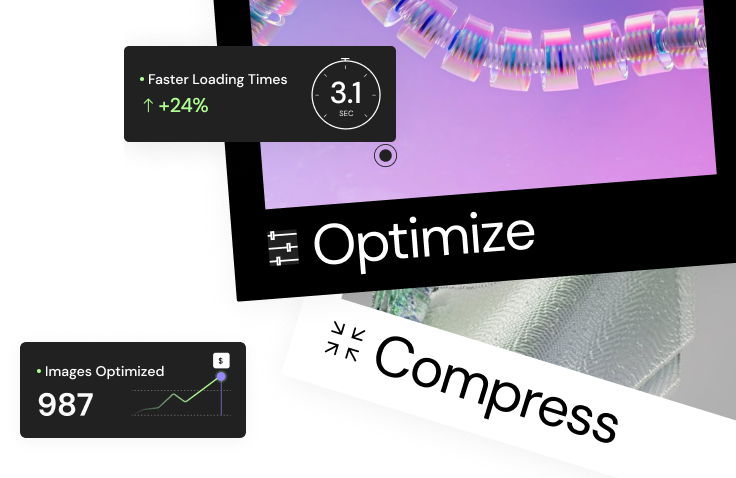
- Optimize Automatically: This is critical. The built-in Image Optimizer automatically converts files to WebP or AVIF formats. This reduces page load weight by up to 30%.
Why does that 30 percent matter? Because Google heavily penalizes slow sites. Heavy images are the number one cause of failed Core Web Vitals. Let the AI handle the compression.
Enhancing Functionality with AI-Generated Code
You aren’t restricted to default settings. If you want a specific hover animation or a custom JavaScript interaction, you don’t need to hire a developer for $150 an hour.
Data shows that 92% of developers are already using AI coding tools. You should be too. The AI Code Assistant writes valid, secure code based on plain English requests.
Here’s what you can easily generate:
- Custom CSS Hover Effects: Ask the AI to make a button scale up by 10% and cast a neon shadow when hovered.
- Scroll Animations: Prompt it to fade in a specific container only when the user scrolls past 50% of the viewport.
- API Integrations: Need to pull live weather data into a custom widget? Angie can write the PHP and JavaScript to fetch and display that data securely.
- Dynamic Form Logic: Generate custom scripts that hide or show specific form fields based on previous user selections.
Always test custom code on a staging environment first. Even though the AI writes clean syntax, you need to verify it doesn’t conflict with other active scripts on your site.
Comparing AI Website Building Costs in 2026
Budgets matter. There’s a massive difference between a fragmented tech stack and a unified platform. Let’s look at the current market costs for AI web building tools.
| Tool Name | AI Features Included | Monthly Cost (Approx) | Best For |
|---|---|---|---|
| Wix Studio | Automated layout adjustments, basic text gen | $16/mo | Beginner portfolios |
| Framer | High-fidelity design generation, localization | $15/mo | UI/UX prototypes |
| Elementor One | AI Site Planner, Angie Agentic AI, Text/Image/Code Gen, Hosting, Opt. | $14/mo ($168/yr) | Professional web creators |
| Custom Agency Build | Human developers using AI copilots locally | $500+ /mo | Enterprise applications |
Notice the value proposition. Elementor One isn’t just a site builder. It’s a unified website creation platform. You get the hosting, the editor, the AI planner, and the accessibility tools all under one subscription. Managing 17 different plugin licenses? Nobody has time for that.
Optimizing for SEO and Performance
A beautiful website that nobody visits is a digital paperweight. Search Engine Optimization (SEO) isn’t optional. Fortunately, AI simplifies the most tedious parts of on-page optimization.
Websites using AI-generated, semantically optimized meta descriptions see an average 10% increase in Click-Through Rates (CTR). That’s free traffic.
- Automated Meta Titles: Prompt the AI to generate titles strictly between 50-60 characters, including your primary keyword.
- Alt Text Generation: Accessibility is crucial. AI can scan your images and write descriptive alt text instantly. (The Ally tool scans for 180+ WCAG issues).
- Content Silos: Ask the AI to analyze your existing pages and suggest internal linking opportunities to build topical authority.
- Schema Markup: Generate valid JSON-LD schema for local businesses, FAQs, or product reviews without touching the raw code.
Semantic search algorithms in 2026 demand highly specific, intent-driven content. Slapping generic AI copy onto a page won’t rank. You must guide the AI to generate structured meta data and natural phrasing that strictly aligns with user search patterns. That’s how you capture traffic.
Itamar Haim, SEO Team Lead at Elementor. A digital strategist merging SEO, AEO/GEO, and web development.
Maintaining Your AI-Generated Website
Building the site is just step one. Launching isn’t the finish line. 64% of business owners believe AI will improve customer relationships by providing faster, more accurate web interactions. But that only happens if the site stays functional.
You can’t just set it and forget it. The web evolves daily.
- Monthly Accessibility Audits: Run the Ally scanner every 30 days. Content changes, and new editors might forget to add alt tags. Keep it accessible.
- Plugin Updates: Even though a unified platform reduces plugin bloat, you still need to update your core WordPress installation. Set up automated backups first.
- A/B Testing Copy: Your first AI-generated headline might be good. Your second might be better. Constantly test new variations to push that conversion rate higher.
Human oversight remains your greatest asset. The AI acts as your tireless intern. You’re the creative director. Review the work, refine the strategy, and keep pushing the boundaries.
Frequently Asked Questions
Why does my AI-generated image look distorted?
This usually happens when your prompt contradicts the selected aspect ratio. For example, asking for a full-body portrait in a 16:9 wide frame forces the AI to fill empty space. Be highly specific about lighting and framing. Always use the generative fill tool to fix small artifacts rather than re-rolling the entire image.
Can AI build a fully functional e-commerce store?
It can build the entire front-end layout and generate product descriptions flawlessly. However, complex backend logic (like shipping APIs and payment gateway routing) still requires basic manual configuration within WooCommerce. AI will style the cart and checkout, but you must plug in your actual bank details.
How does the Elementor AI Site Planner actually work?
It acts as a rapid prototyping engine. You describe your business, and it generates a complete sitemap. Then, it populates those pages with wireframe containers and drafted copy. It basically bypasses the traditional mockup phase, saving you hours of client negotiation.
Is AI-generated code safe for production websites?
Yes, provided you review it. Angie generates clean, standard WordPress PHP and JavaScript. It doesn’t use deprecated functions. However, you should always test new custom widgets or admin snippets in a staging environment before pushing them to your live server.
How do I handle client handoff for an AI-built site?
You hand it off exactly like a manually built site. The final output is standard HTML, CSS, and WordPress code. The client doesn’t need to know how to prompt the AI unless they want to generate their own blog posts. The underlying structure is completely standard.
What happens if I cancel my AI subscription?
Everything you’ve already generated stays on your site. The images, the text, the CSS, and the layouts are permanently yours. You simply lose the ability to generate new elements directly inside the editor. Your site won’t break.
Can I use AI to fix website accessibility issues?
Absolutely. Tools like Ally scan for over 180 WCAG issues. It will flag missing ARIA labels, poor contrast ratios, and empty links. You can then use AI to generate the appropriate fixes, though you should never blindly claim full legal compliance without human verification.
How do AI translations compare to human translators?
For standard web copy, they’re incredibly accurate. The AI understands context and idiom much better than older dictionary-based tools. It handles 25+ languages easily. For highly technical medical or legal documents, you might still want a human editor to review the final output.
Will AI replace web developers entirely?
No. It replaces the boring, repetitive tasks. Developers used to spend hours writing basic flexbox grids or basic custom post type declarations. Now, AI handles that grunt work. This frees developers to focus on complex user experiences and high-level strategy.
Why is a unified platform better than separate AI plugins?
Speed and context. If you use a separate AI text generator, a separate image generator, and a separate coding assistant, they don’t talk to each other. A unified system like Elementor One shares context. The AI knows what theme you’re using and what colors your brand requires.
Looking for fresh content?
By entering your email, you agree to receive Elementor emails, including marketing emails,
and agree to our Terms & Conditions and Privacy Policy.