Why Your Business Needs an Email Marketing Funnel Now More Than Ever
Before we dive into the “how,” let’s talk about the “why.” Understanding the power of an email funnel is the first step toward committing to building one that works. It’s more than just sending out a weekly newsletter; it’s about creating a strategic system that guides potential customers from their first interaction with your brand to their first purchase and beyond.
The Rising Tide of Customer Acquisition Costs
If you’ve run digital ad campaigns recently, you know that customer acquisition costs are on the rise. Changes in data privacy from major tech players have made it harder to target audiences with precision, and the sheer volume of online businesses means you’re competing with more brands for the same eyeballs.
This is where email marketing truly shines. Unlike paid channels, your email list is an owned asset. You’re not subject to algorithm changes or bidding wars. Once someone subscribes, you have a direct, reliable way to communicate with them, turning an expensive one-time click into a long-term relationship. This shift toward owned channels is a smart move for any business looking for sustainable growth.
The Power of Direct Communication and Personalization
How do your customers actually want to hear from you? Despite the rise of new channels, studies show that 60% of consumers still prefer email for receiving product updates and promotions. Email is a personal and direct space, and when used correctly, it can build incredible trust.
An email funnel takes this a step further by enabling powerful personalization. You can send different messages to different people based on their actions and interests.
- Someone who downloaded a guide on running shoes gets different content than someone who browsed hiking boots.
- A customer who abandoned their cart receives a gentle reminder.
- A loyal, repeat buyer gets an exclusive VIP offer.
This level of tailored communication makes customers feel understood, not just marketed to. In fact, 60% of consumers say they are likely to become repeat purchasers after a personalized shopping experience, making it a win-win for everyone involved.
Building a Predictable Revenue Engine
Ultimately, a business needs to generate revenue consistently. An automated email funnel acts as a predictable engine for sales. Once set up, it works for you 24/7, nurturing new leads, recovering potentially lost sales, and encouraging repeat business.
For web creators and agencies, this presents a huge opportunity. You can go beyond just building a website for a client. By designing and managing a reliable email funnel, you provide an ongoing service that delivers measurable value. You can show your client exactly how much revenue your work generated, solidifying your role as a strategic partner and creating a stable, recurring revenue stream for your own business. With the right toolkit designed for WordPress, this becomes a streamlined, profitable service.
In short, an email funnel isn’t just another marketing task. It’s a foundational business asset that lowers your reliance on expensive ads, builds stronger customer relationships, and creates a reliable source of income.
Understanding the Four Stages of the Email Marketing Funnel
To build an effective funnel, you need to understand the journey your customer takes. We can break this journey down into four distinct stages. Each stage has a specific goal and requires different types of content and communication to move the person smoothly to the next step.
| Funnel Stage | Goal | Key Activities |
| Awareness (TOFU) | Attract visitors & capture email addresses | Lead magnets, opt-in forms, landing pages |
| Consideration (MOFU) | Nurture leads & build trust | Welcome series, educational content, segmentation |
| Conversion (BOFU) | Drive the sale or desired action | Abandoned cart emails, special offers, upsells |
| Loyalty & Advocacy | Retain customers & create fans | Post-purchase follow-ups, re-engagement campaigns |
Let’s explore each of these stages in more detail.
Stage 1: Awareness (Top of the Funnel – TOFU)
The journey begins here. At the awareness stage, your goal is simple: attract the right people to your website and persuade them to subscribe to your email list. You’re not trying to make a hard sale yet. Instead, you’re offering something of value in exchange for their email address.
Key Tactics for Lead Capture
To convince someone to hand over their email, you need a compelling reason. This is where lead magnets come in.
- Lead Magnets: A lead magnet is a free resource you offer in exchange for an email address. The key is to provide something your target audience genuinely wants.
- For eCommerce Stores: A 10% discount on their first order, free shipping, or early access to a new product launch.
- For Service Businesses: A helpful checklist, an insightful eBook, a free webinar, or a case study.
- For Bloggers/Creators: An exclusive guide, a resource library, or a multi-day email course.
- Opt-in Forms: These are the gateways to your email list. The design and placement of your forms matter.
- Pop-up Forms: These appear after a user has been on a page for a set time or shows an intent to exit. They are highly effective but should be used tastefully.
- Embedded Forms: Placed directly within your blog posts or on key pages, these forms feel like a natural part of the content.
- Sticky Bars: A full-width bar at the top or bottom of the screen that stays visible as the user scrolls.
- Landing Pages: For more significant lead magnets, like a webinar or a detailed eBook, create a dedicated landing page. This page should have one job: to convince the visitor to sign up. Remove all other distractions, like the main navigation, and focus on the benefits of your offer.
The Foundation of Delivery
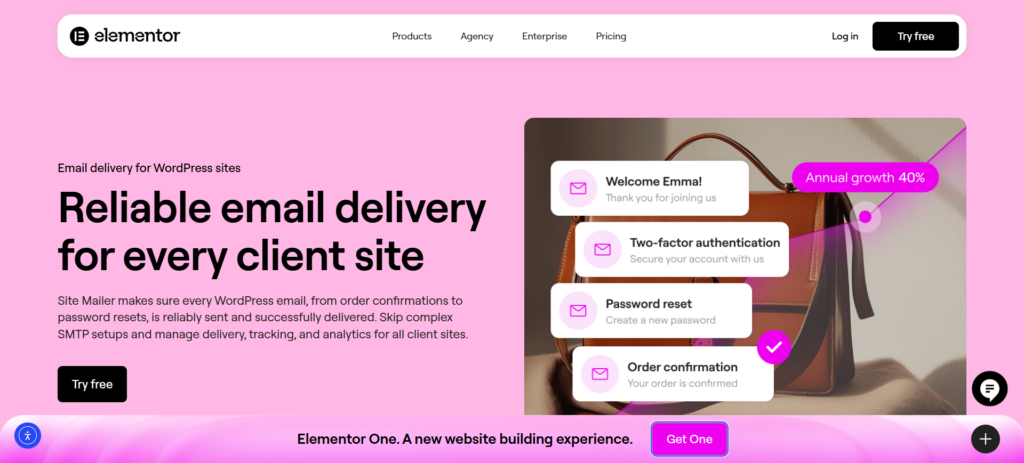
You can have the most beautiful forms in the world, but they are useless if the confirmation email never arrives. Many WordPress sites rely on the default PHP mail function, which often fails spam filters. This is where using a dedicated tool like Site Mailer becomes essential. By handling authentication protocols like SPF, DKIM, and DMARC automatically, it ensures that when a user requests your lead magnet, it actually lands in their inbox, securing that crucial first touchpoint.
Stage 2: Consideration (Middle of the Funnel – MOFU)
Okay, you have a new subscriber. Congratulations! Now what? Don’t just dump them onto your general newsletter list. The consideration stage is all about nurturing that new relationship, building trust, and educating them about how you can solve their problems.
Crafting the Perfect Nurture Sequence
The most critical flow at this stage is the welcome series. This is a sequence of 2-4 emails sent automatically to every new subscriber. It has some of the highest open rates you’ll ever see, so make it count.
A simple yet effective welcome series could look like this:
- Email 1: Welcome & Delivery. Immediately send the lead magnet they signed up for. Thank them for joining and briefly introduce your brand.
- Email 2: Connect & Educate. Share your brand’s story or mission. Address a common pain point your audience faces and hint at how your products or services help.
- Email 3: Social Proof. Showcase a customer testimonial, a case study, or links to your best-selling products with glowing reviews. Let others do the selling for you.
- Email 4: Soft Call-to-Action. Encourage them to follow you on social media or check out a popular blog post. You’re not pushing for a sale yet, just deeper engagement.
Segmentation: The Key to Relevance
As you nurture your leads, you should start segmenting them. Segmentation is simply the process of grouping your contacts based on shared characteristics or behaviors. This allows you to send more relevant, targeted messages.
You can start with simple segments:
- Based on the sign-up source: Group people based on which lead magnet they downloaded.
- Based on demographics: If you collect information like location or interests, use it.
- Based on engagement: Create a segment of highly engaged subscribers who open every email.
As you grow, you can use more advanced segmentation based on website behavior. A reliable infrastructure ensures that as you slice and dice your lists, the delivery remains consistent across all segments.
Stage 3: Conversion (Bottom of the Funnel – BOFU)
Your subscriber now knows who you are and trusts you. They understand the value you provide. Now is the time to encourage them to take action and make a purchase. The messaging here becomes more direct and offer-focused, but it should still feel helpful.
High-Impact Conversion Campaigns
For WooCommerce stores, one automation stands out above all others: the abandoned cart series. A staggering number of online shopping carts are abandoned before checkout. An automated email sequence can recover a significant portion of that lost revenue.
- Abandoned Cart Automation: This is a short series of emails (typically 1-3) sent to anyone who adds an item to their cart but doesn’t complete the purchase.
- Email 1 (1 hour later): “Did you forget something?” A simple, helpful reminder with a link back to their cart.
- Email 2 (24 hours later): “Your items are waiting.” You can add social proof here, like reviews for the products in their cart.
- Email 3 (48 hours later): “Your cart is about to expire.” Consider including a small discount (like 10% off) as a final nudge to complete the purchase.
The Power of Integrated Analytics
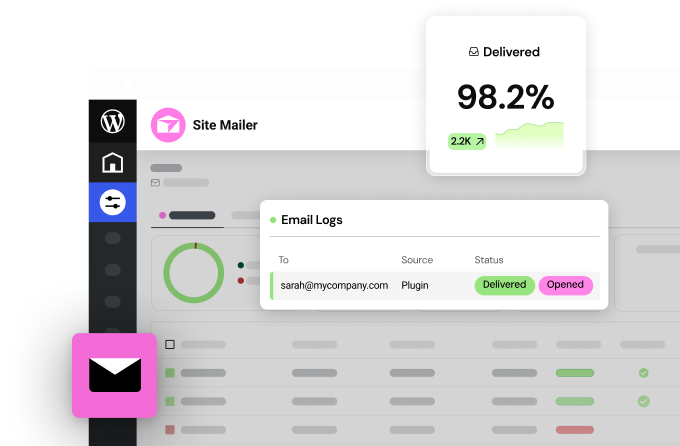
How do you know if your funnel is actually working? You need data. This is where the integrated dashboard in Site Mailer becomes essential. It doesn’t just send emails; it tracks them. You can view logs, open rates, and delivery metrics in real-time. For a web creator, this visibility is powerful. It allows you to troubleshoot issues instantly—if a customer claims they didn’t get their discount code, you can check the logs, see the failure reason, and resend it immediately from the dashboard.
Stage 4: Loyalty & Advocacy (Post-Funnel)
The funnel doesn’t end with the first sale. In many ways, it’s just the beginning. It costs far less to retain an existing customer than to acquire a new one. This final stage is all about turning one-time buyers into repeat customers and loyal brand advocates.
Building Long-Term Relationships
Your communication should continue after the purchase.
- Post-Purchase Follow-up: Send order confirmations, shipping notifications, and a request for a product review a week or two after they receive their item. These are transactional emails, but they are vital for customer experience.
- Re-engagement Campaigns: If a customer hasn’t purchased in a while, send them a targeted “we miss you” campaign with a special offer to win them back.
- VIP & Loyalty Programs: Create an exclusive segment for your best customers. Give them early access to sales, special discounts, or exclusive content to make them feel valued.
Step-by-Step: Building Your First Funnel in WordPress
Now that you understand the theory, let’s get practical. This section will walk you through building a foundational email funnel inside WordPress, ensuring that the technical backbone—the delivery—is rock solid.
Prerequisite: Choosing Your Toolkit
The marketing tool landscape is vast. You have standalone Email Service Providers (ESPs) and a wide array of WordPress plugins. However, a common point of failure for many funnels is the delivery method. Relying on default WordPress mail settings often leads to emails landing in spam.
A more modern and efficient approach is to pair your funnel strategy with a robust delivery plugin. For this walkthrough, we’ll be referencing the features and workflow you’d find in Site Mailer. It’s built from the ground up for WordPress and ensures that the critical emails your funnel generates—from sign-up confirmations to order receipts—actually reach the customer.
Step 1: Secure Your Lead Capture Delivery
Let’s start by ensuring your lead magnet delivery is reliable. When a user fills out a pop-up on your WooCommerce store, the first email they receive is crucial.
- Configure Authentication: Before you launch your form, use the Site Mailer setup wizard. It bypasses unreliable server restrictions and automatically handles SPF, DKIM, and DMARC protocols. This acts as a “digital passport” for your emails, proving to providers like Gmail that you are a legitimate sender.
- Verify Your Domain: Connect your custom domain to the plugin. This ensures that the “From” address on your welcome emails matches your website, significantly boosting trust and open rates.
- Test the Flow: Send a test email from the dashboard to confirm everything is working perfectly before you start driving traffic to your forms.
Step 2: Monitor Your Welcome Series
Once your automation tool triggers the welcome sequence, you need visibility to ensure it’s landing.
- Track Open Rates: As your welcome emails go out, monitor the open rate tracking in the Site Mailer dashboard. High open rates on the first email indicate your subject lines are working and your sender reputation is healthy.
- Check for Failures: If a subscriber complains they didn’t get their code, check the failure reason troubleshooting log. It might be a typo in their email address or a full inbox.
- Resend Instantly: If an email bounces or gets lost, use the one-click resend feature to get that welcome email to the user immediately, saving the relationship.
Step 3: Fortify Your Abandoned Cart Emails
Abandoned cart emails are high-stakes messages. If they don’t arrive, you lose money.
- Bypass PHP Mail: Default WooCommerce emails (including cart reminders) use the PHP mail function, which is often blocked by hosts. Site Mailer routes these emails through a secure infrastructure designed for high deliverability.
- Suppression Management: Sometimes users unsubscribe or their addresses become invalid. Site Mailer manages suppression lists automatically, ensuring you don’t keep sending to bad addresses, which protects your sender reputation for future campaigns.
Step 4: Track Performance and Prove Value
A few weeks after launching the funnel, it’s time to check the results.
- Open the Analytics Dashboard: Inside the Site Mailer dashboard, you’ll find logs and metrics for every email sent by your WordPress site.
- Review Delivery Health: Look at your average deliverability rate. With Site Mailer powering over 34 million emails with a 95%+ placement rate, you should see consistent green checks.
- Prepare Your Report: Take a screenshot of the delivery logs and open rates. You can now confidently tell your client, “The email funnel is technically sound. We have a 99% delivery rate, ensuring every potential sale had the chance to convert.”
Choosing the Right Marketing Toolkit for Your WordPress Site
The success of your email marketing funnel depends heavily on the tools you use. For web creators working in the WordPress ecosystem, the right choice can make the difference between a frustrating, time-consuming process and an efficient, profitable service offering.
Key Factors to Consider
When evaluating options, focus on these four critical factors:
- WordPress Integration: Is the tool truly native, or is it just a simple connector plugin? A truly WordPress-native solution leads to better performance and fewer conflicts.
- Deliverability: This is the silent killer of marketing campaigns. Does the tool include authentication protocols and dedicated sending infrastructure?
- Ease of Use: As a busy creator, your time is valuable. The ideal tool should offer a simple setup wizard that removes the need for complex API keys or SMTP credentials.
- Analytics and Troubleshooting: Can you easily see what happened to an email? The platform must provide clear, real-time logs that let you spot issues before your clients do.
A Brief Look at the Tool Landscape
The market offers several types of solutions, each with its own pros and cons.
- Standalone ESPs: These are powerful, dedicated email marketing platforms. They offer deep functionality but often require complex setup to integrate with WordPress.
- Basic SMTP Plugins: Traditional SMTP plugins require you to configure ports and credentials manually. They connect you to a mail server but don’t always provide the logs or intuitive interface needed to troubleshoot quickly.
- The WordPress-Native Delivery Engine (Site Mailer): This category represents the ideal solution for WordPress professionals. Site Mailer is designed specifically to solve the “WordPress email problem.” It bypasses the complexity of external SMTP servers and works out of the box. By ensuring high deliverability for all site emails—from marketing automations to admin notifications—it provides the reliability foundation that every successful funnel requires.
Conclusion
Building an email marketing funnel is one of the most powerful investments you can make for sustainable business growth. It allows you to move beyond the uncertainty of paid advertising by creating a direct, reliable channel to your customers.
However, a funnel is only as good as its deliverability. If your carefully crafted emails end up in the spam folder, the strategy fails. For web creators, ensuring this reliability is a pivotal opportunity. By implementing a robust delivery solution like Site Mailer, you ensure that every stage of the funnel—from awareness to loyalty—functions flawlessly. You deliver clear, measurable results, strengthen your client relationships, and unlock valuable recurring revenue streams by managing the essential infrastructure that keeps business moving.