A great subject line can dramatically boost open rates, drive engagement, and ultimately, increase sales. For web professionals, mastering the art of the subject line is a critical skill that delivers tangible results for clients. This guide breaks down 26 sales-optimized subject lines that will help you cut through the noise in 2026.
The Psychology Behind a Click-Worthy Subject Line
Before we dive into the examples, it’s important to understand why certain subject lines work. Effective subject lines aren’t just clever; they tap into fundamental human psychology. Understanding these triggers will not only help you use the examples in this list but also empower you to craft your own compelling subject lines from scratch.
Think of it this way: when a user scans their inbox, they are making split-second decisions based on a few key questions: “Who is this from?”, “What do they want?”, and “What’s in it for me?”. Your subject line is your one chance to provide a compelling answer. The most successful ones typically leverage one of four powerful psychological drivers.
- Curiosity: Humans are naturally inquisitive. A subject line that creates a “curiosity gap” by hinting at something interesting without giving it all away makes people want to learn more. They click to satisfy their need for an answer.
- Urgency (or FOMO): The fear of missing out (FOMO) is a powerful motivator. Subject lines that imply scarcity, a limited-time offer, or an impending deadline create a sense of urgency. This encourages immediate action because people don’t want to lose a potential opportunity.
- Personalization: In a world of mass marketing, a personal touch stands out. Subject lines that use a recipient’s name, reference their past behavior, or speak to their specific interests make the email feel like it was crafted just for them. This builds a connection and makes the message feel more relevant.
- Value: Ultimately, people open emails that promise to solve a problem or offer a clear benefit. A subject line that immediately communicates value—whether it’s a discount, a solution to a common pain point, or useful information—gives subscribers a compelling reason to engage.
As you go through the examples below, you’ll see how each one uses these principles to grab attention and earn the click. Understanding these core concepts is the first step to transforming your email marketing performance.
Subject Lines That Spark Curiosity & Intrigue
Curiosity-driven subject lines work by opening a loop in the reader’s mind. They pose a question or make a statement that demands an answer, and the only way to get it is by opening the email. These are great for re-engaging a cold list or promoting content that leads to a sale.
Here are a few examples that create that irresistible urge to know more:
- “Don’t open this email” This classic example of reverse psychology is playful and daring. It challenges the recipient, and the natural human instinct to defy a command often proves too strong to ignore. It’s best used sparingly and with an audience that appreciates a bit of humor.
- “Is this the next big thing in [Your Industry]?” This subject line hints at exclusive, forward-looking information. For anyone interested in your industry, it creates an immediate sense of intrigue and a desire to be in the know. It positions your brand as a thought leader with its finger on the pulse.
- “A surprise for you inside…” Who doesn’t love a surprise? This subject line is simple but effective because it promises something unexpected and delightful. The “surprise” could be anything from a special discount to early access to a new product, but the mystery is what gets the open.
- “What they’re not telling you about [Topic]” This one taps into the desire for insider knowledge. It suggests that there is hidden information that you are about to reveal. This is especially powerful for educational content that helps a customer make a more informed purchase decision down the line.
- “We need to talk.” This subject line is intentionally vague and personal, mimicking a message you might get from a friend or colleague. Its serious tone creates a strong sense of curiosity and even a little bit of concern, making it almost impossible not to open. Use this one carefully, as the email content needs to justify the dramatic opener.
- “Did you forget something?” This is a gentler, more curious take on the standard abandoned cart subject line. Instead of being overtly salesy, it feels more like a helpful reminder. It opens a loop by making the user question what they might have left behind, prompting them to open the email to find out.
Subject Lines That Create Urgency & Scarcity
Nothing drives action quite like the fear of missing out. Subject lines that create a sense of urgency or scarcity push subscribers to act now rather than later. These are incredibly effective for flash sales, limited-inventory promotions, and seasonal offers.
Here’s how you can use FOMO to drive immediate sales:
- “Your discount expires in 24 hours.” This subject line is direct and effective. It sets a clear deadline, forcing the subscriber to make a decision quickly. The specificity of “24 hours” makes the deadline feel concrete and real, increasing the pressure to act.
- “Last chance to get [Product] at this price.” This implies an impending price increase, which is a powerful motivator for anyone who has been considering a purchase. It frames the current price as a special opportunity that is about to disappear, encouraging them to buy before they lose out on the better deal.
- “Only 50 left in stock!” This subject line leverages scarcity by highlighting limited inventory. When a product is scarce, its perceived value goes up. This is perfect for popular items that are close to selling out. It creates a competitive environment where subscribers feel they need to act fast to secure the item before someone else does.
- “Clock’s ticking: Our annual sale ends tonight.” Using an idiom like “clock’s ticking” adds a bit of personality while still conveying urgency. It’s a clear and final warning that a major sales event is about to conclude, making it a great subject line for the last day of a promotion.
- “Don’t miss out on free shipping.” Shipping costs are a major factor in online purchase decisions. Offering free shipping for a limited time is a powerful incentive, and this subject line puts that benefit front and center while adding a touch of urgency. It frames free shipping as a valuable perk that could be lost.
- “For VIPs only: Early access ends soon.” This subject line combines urgency with exclusivity. It makes subscribers feel special by offering them “early access” but also introduces a deadline to ensure they take advantage of their privileged status immediately.
Subject Lines That Use Personalization & Exclusivity
In a sea of generic marketing messages, personalization is your lifeboat. Subject lines that are tailored to the individual subscriber feel more relevant and are far more likely to get opened. Exclusivity works in a similar way, making the recipient feel like they are part of a special group.
Check out these examples that make your subscribers feel seen:
- “[Name], we picked this just for you.” Using the subscriber’s first name is one of the easiest and most effective forms of personalization. Combining it with a phrase like “picked just for you” suggests a curated experience based on their preferences or past behavior, making the email feel highly relevant.
- “Is this still your delivery address?” This is a clever way to re-engage an inactive subscriber. It’s a transactional-sounding question that feels personal and important. It prompts an open out of a need to confirm or correct information, giving you a chance to present them with a new offer inside the email.
- “An exclusive offer for our best customers.” This subject line makes subscribers feel valued and appreciated. It frames the offer not as a general promotion but as a special reward for their loyalty. This strengthens the customer relationship and makes the offer inside seem more compelling.
- “You’re invited: A private online event.” The word “invited” feels much more personal and exclusive than “announcing.” This subject line makes the event feel like a special occasion that is not open to the general public, increasing its perceived value and encouraging RSVPs.
- “Since you liked [Product Category], you’ll love this.” This is a great example of behavior-based personalization. It shows that you are paying attention to the subscriber’s interests and using that information to provide helpful recommendations. It’s a powerful way to cross-sell or upsell in a way that feels genuinely useful to the customer.
- “A special gift for your birthday!” Birthday emails have some of the highest open rates of any marketing email. A subject line that clearly announces a birthday gift is almost guaranteed to be opened. It’s a simple, automated way to create a moment of delight and drive a sale.
- “Your weekly [Topic] digest is here.” For recurring content newsletters, this subject line establishes a familiar and reliable cadence. The personalization comes from the “[Topic]” that the user subscribed to, assuring them that the content inside is exactly what they signed up for and are interested in.
Subject Lines That Drive Sales with Value & Pain Points
Sometimes, the most effective approach is to be direct. Subject lines that clearly state the value proposition or offer a solution to a known problem can be incredibly effective. They answer the “What’s in it for me?” question before the subscriber even opens the email.
Here are some powerful examples that lead with value:
- “Save 50% on your entire order today.” A clear, strong discount is one of the most powerful motivators for a purchase. This subject line is unambiguous and puts the most important information—the massive savings—right at the front. There is no mystery, just a powerful incentive to open the email and start shopping.
- “Stop wasting money on [Problem].” This subject line leads by identifying a common pain point. It grabs the attention of anyone who is experiencing that problem and immediately positions your product as the solution. It’s a classic problem-solution formula that works because it speaks directly to a need.
- “Our new [Product] will change the way you [Task.]” This subject line focuses on the transformative benefit of a product. It doesn’t just announce a new item; it promises a better way of doing something. This is great for innovative products that solve a long-standing problem or dramatically improve a process.
- “Free guide to achieving [Goal]” Offering free, valuable content is a great way to build trust and generate leads. This subject line clearly communicates the benefit—a free guide—and connects it to a desirable outcome for the subscriber. It’s a low-risk, high-value proposition that encourages an open.
- “See what [Influencer/Happy Customer] is saying about us.” This subject line leverages social proof to build credibility and trust. A positive review or endorsement from a respected figure or even just a fellow customer can be more persuasive than anything you could say about yourself. It shows that other people are happy with your product, reducing the perceived risk for a new buyer.
- “[Product] vs. [Product]: A side-by-side comparison.” For customers who are in the consideration phase of their buying journey, this subject line is incredibly valuable. It promises clear, helpful information that will aid their decision-making process. By providing this comparison, you are positioning your brand as a helpful and transparent resource.
- “Get free shipping on all orders. No minimum.” This is another value-led subject line that removes a major barrier to purchase. The “no minimum” part is crucial, as it makes the offer even more attractive and straightforward. It’s a simple, powerful promise that can easily tip the scales in favor of a purchase.
The Invisible Barrier: Why Good Subject Lines Fail
You can write the most compelling subject line in the world. You can use every psychological trigger in the book. But none of that matters if the email never reaches the inbox.
For web creators building sites on WordPress, this is the hidden struggle. You spend hours crafting the perfect user journey—the welcome email, the purchase receipt, the password reset—only for those emails to vanish into a spam folder or disappear entirely due to server restrictions using the default PHP mail function.
This is where Site Mailer comes in.
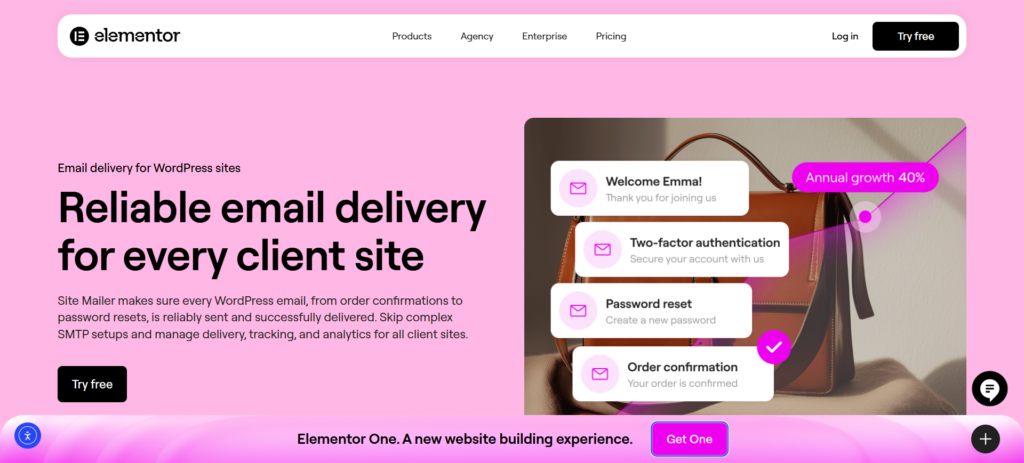
It is the infrastructure that supports your creativity. While you focus on the subject lines that drive engagement, Site Mailer ensures the plumbing of your WordPress site is actually working, boasting a 95%+ average inbox placement rate.
Reliability Without the Complexity
Traditional methods for fixing WordPress email delivery involve complex SMTP setups, API keys, and third-party configurations that are fragile and prone to breaking.
Site Mailer solves this by bypassing the unreliable PHP mail() function and routing your transactional emails through a secure, authenticated delivery service. It requires no SMTP setup, wizardry, or coding. It handles the heavy lifting of SPF, DKIM, and DMARC protocols automatically, ensuring your emails pass spam filters and arrive where they belong.
Visibility When It Matters Most
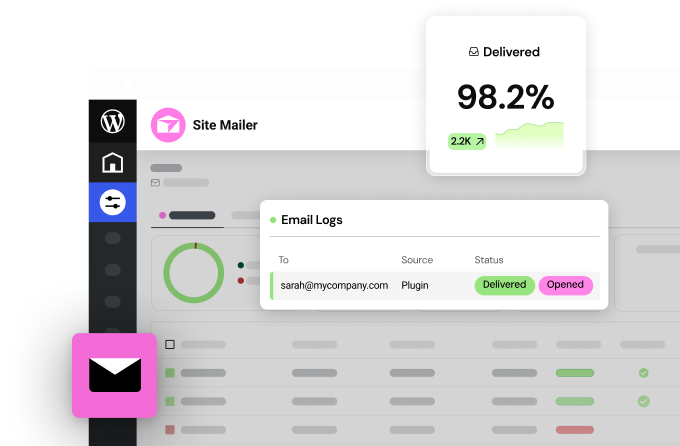
When a client asks, “Why didn’t I get that notification?”, you need an answer better than “I’m not sure.” Site Mailer provides a comprehensive dashboard with:
- Real-time logs: See exactly when an email was sent and its status.
- Open rates: Verify if the email was actually viewed.
- Failure troubleshooting: Identify why an email bounced and resend it instantly.
Conclusion: Delivery is the First Step to Sales
Your email subject line is the key to opening the door, but Site Mailer is the vehicle that gets you to the house.
To drive sales and build trust, your clients need a site that communicates reliably. Whether it’s a receipt for a purchase or a notification for a new lead, these transactional moments are critical touchpoints. By securing your delivery infrastructure with Site Mailer, you ensure that every carefully crafted subject line has the chance to do its job.