
Running a website is rewarding, but keeping up with global privacy laws can feel daunting. You’re not alone, and staying compliant is easier than it looks. If you’re comparing tools, you’ve probably met iubenda and Complianz, two names that manage cookies very differently. Here’s how they compare, plus the best alternatives for 2026.
Key Takeaways
- Complianz manages your whole compliance process inside WordPress.
- iubenda runs as an external, cloud-hosted platform, handy for brands managing multiple sites.
- Design-first options like Cookie Consent by Elementor let you style banners visually in the page editor, no external tools.
- Google Consent Mode v2 support is now a strict requirement for any site using Google Analytics or Ads with European visitors.
- The right tool depends on whether you want a WordPress dashboard or a centralized cloud workspace.
| Compliance Solution | Setup Interface | Primary Strength | Google Consent Mode v2 Support | Best For |
|---|---|---|---|---|
| Complianz | WordPress Dashboard | Deep legal wizard designed for WP configuration | Supported natively | WordPress purists wanting automated documents |
| iubenda | External Cloud Dashboard | Multi-platform compliance management | Supported with integration script | Brands managing multiple non-WP platforms |
| Cookie Consent (by Elementor) | WordPress & Elementor Editor | Visual editor-style customization and zero dashboard hopping | Supported natively | WordPress designers looking for a smooth, unified setup |
| Cookiebot | External Cloud Dashboard | Deep and highly accurate automated cookie scans | Supported natively | Medium to large web platforms requiring automated reports |
| CookieYes | External Cloud Dashboard | Lightweight dashboard with quick setup steps | Supported natively | Publishers wanting simple, centralized off-site logging |
The Shift Toward Privacy Compliance in 2026
Privacy laws keep changing, and keeping up can feel like chasing a moving target. Most sites once slapped a generic banner on the homepage and called it done, but those days are gone: regulators in Europe, California, and beyond now enforce the rules, and collecting data without consent can mean fines.
One of the biggest shifts is Google Consent Mode v2: if you serve EEA visitors and use Google Analytics or Ads, it’s now a strict requirement, or your marketing tags stop sending data you need to measure performance.
Browsers are changing too. With third-party cookies phasing out, sites need first-party data and clear opt-ins to keep tracking clean. The market is consolidating too: smaller tools are fading while major systems add features, so something simple and budget-friendly matters most.
The Head-to-Head: iubenda vs Complianz
Complianz and iubenda take different approaches. Here’s how they compare.
Setup and Ease of Use
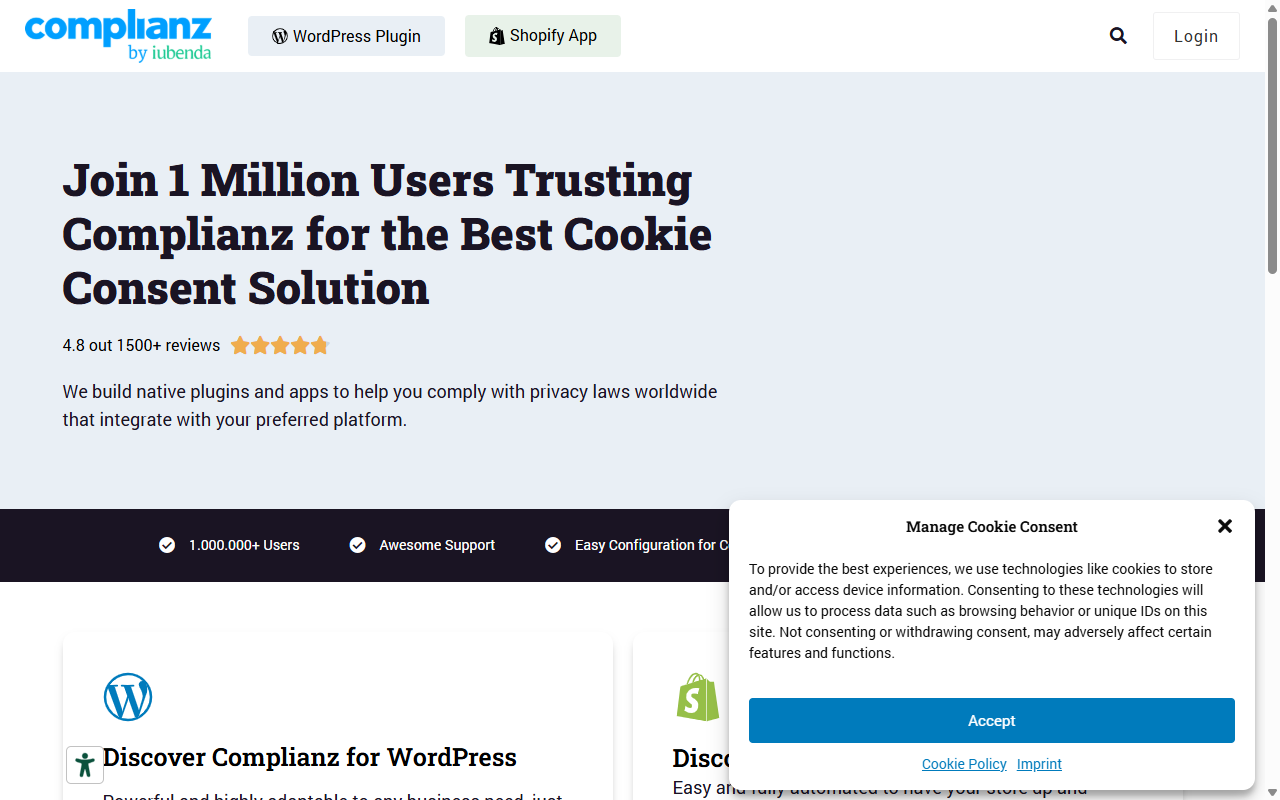
Complianz is WordPress-first: a wizard in your dashboard covers your regions, business structure, and tools, so you never leave the site.
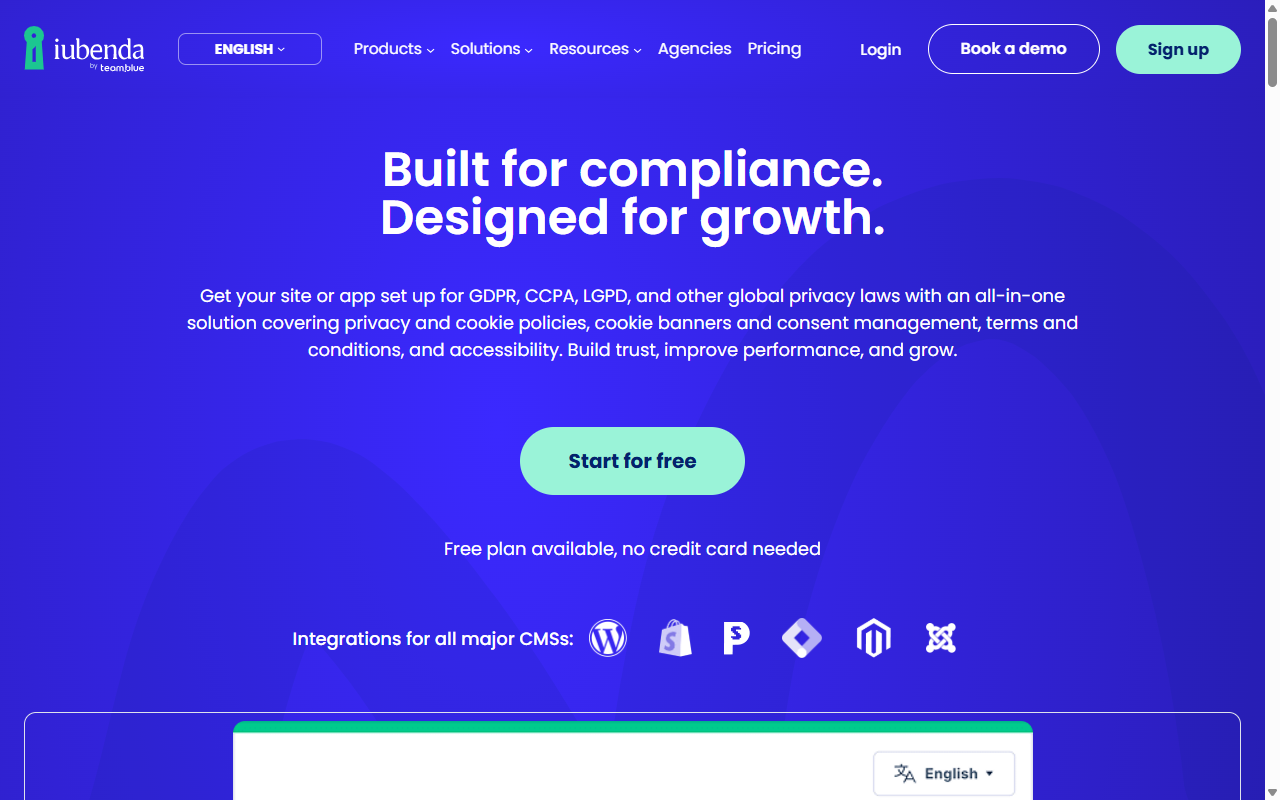
iubenda is cloud-hosted: you build policies and style your banner in their dashboard, then paste a snippet into your header, though it means managing another account for changes.
Visual Customization and Design Flexibility
Your banner is often the first thing visitors see, so it should match your brand. Complianz configures design through WordPress settings, though unique changes mean custom CSS.
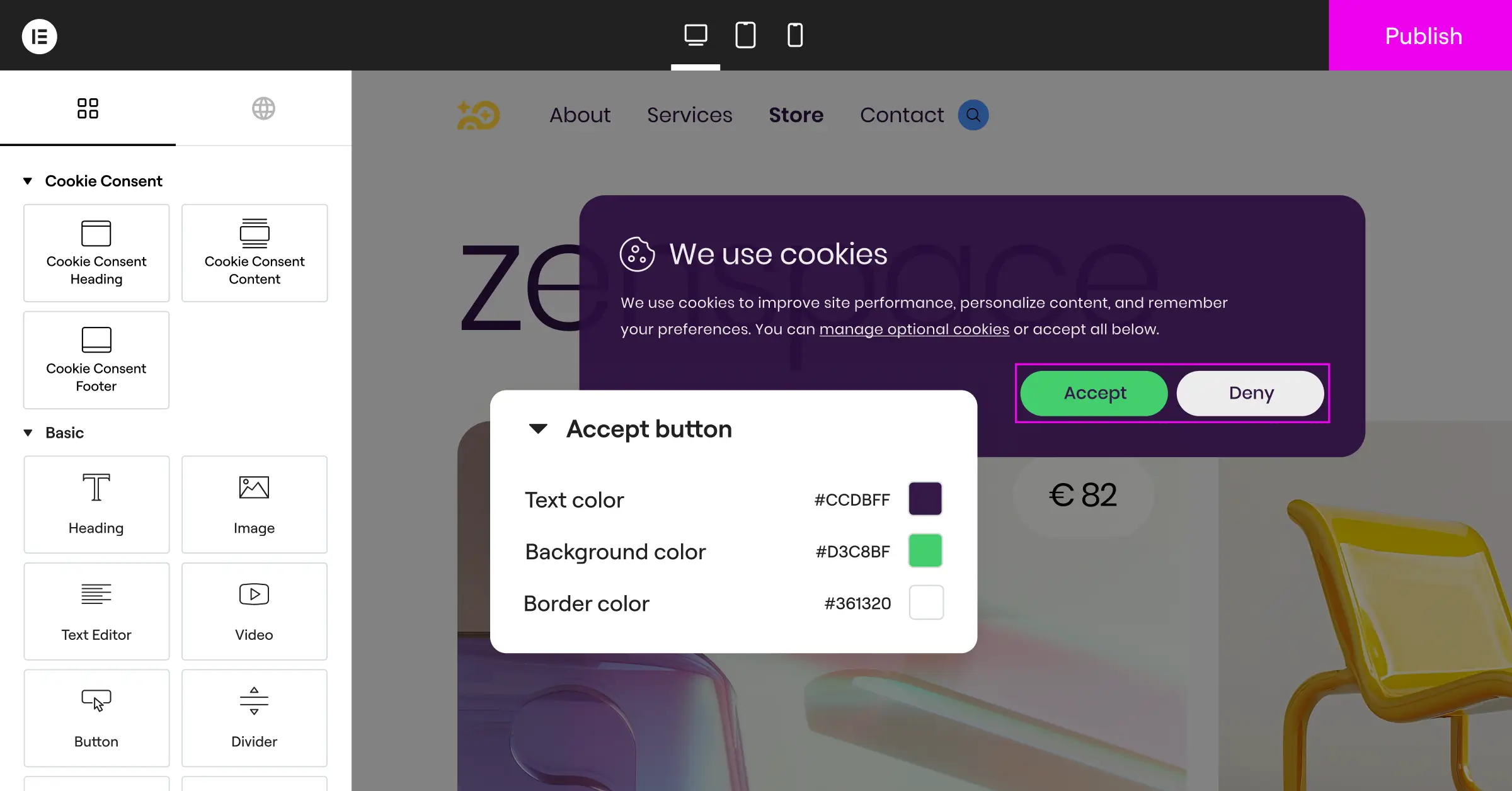
iubenda offers a visual customizer in their cloud app, but since it’s not connected to your WordPress theme, matching colors and fonts takes extra effort. Many prefer styling in Elementor instead, keeping everything in one workflow.
Compliance Depth and Auto-Updates
Both tools cover legal requirements well. Complianz works locally, generating privacy pages and policies inside WordPress and pushing updates when laws change.
iubenda is strong on legal documentation too: cloud policies are monitored by an in-house legal team, so law changes show up without manual edits.
Why Web Creators Prefer Dashboard-Native Cookie Consent
Both iubenda and Complianz are solid options, but external platforms add friction many site owners avoid. That’s why more turn to Elementor’s Cookie Consent capability, which makes staying compliant feel lighter.
This native tool is built for WordPress. Since it’s part of the Elementor workspace, you never jump between dashboards or write custom code to style a banner.
First, it speeds up your workflow: setup takes about five minutes through a three-step process, no waiting on an external cloud.
Second, you get full design control: instead of custom CSS or an external styling window, you design every element in your visual site builder, so the banner looks natural on your site.
Third, it keeps your site fast and lightweight. Running natively means no heavy third-party scripts from external servers, helping page speed and rankings, and it includes Google Consent Mode v2 support plus consent logs.
“Managing privacy requirements doesn’t have to break your design workflow. The best tools are those that blend compliance with usability, keeping your site fast and your visitors secure.”
Itamar Haim, Web Compliance Specialist
The 10 Best Cookie Consent Solutions in 2026
Here are the top ten tools in 2026 to help you manage your site’s cookie consent smoothly.
1. Complianz
Complianz is a privacy suite for WordPress, running locally on your server. A setup wizard configures banners and documents automatically.
- Scans your site for cookies and tracking scripts.
- Builds privacy policies and cookie declarations in your dashboard.
- Blocks iframe content and third-party scripts before agreement.
- Detects user location to show the correct banner.
- Integrates with translation tools for multi-lingual compliance.
Complianz has a free WordPress.org version; premium plans cover more privacy laws and multi-site licenses.
Pros: Deeply integrated with WordPress, processes data locally.
Cons: The setup wizard has many steps, a lot for simple sites.
Verdict: A strong choice for WordPress users wanting automated documents without leaving the site.
2. iubenda
iubenda is a popular cloud-based compliance service for websites, apps, and software, useful across WordPress, Shopify, and custom HTML. Add a snippet and their legal team keeps your compliance text updated.
- Generates legally vetted privacy policies, updated automatically.
- Logs consent transactions securely in a hosted dashboard.
- Translates banner text into dozens of languages.
- Syncs compliance updates across sites from one portal.
- Displays clean cookie banners sized for any screen.
iubenda offers entry-level and premium plans based on site count and features.
Pros: Highly versatile across platforms, with managed legal updates.
Cons: Requires configuring settings on an external dashboard.
Verdict: A good fit for companies running multiple sites wanting one dashboard for everything.
3. Cookie Consent (by Elementor)
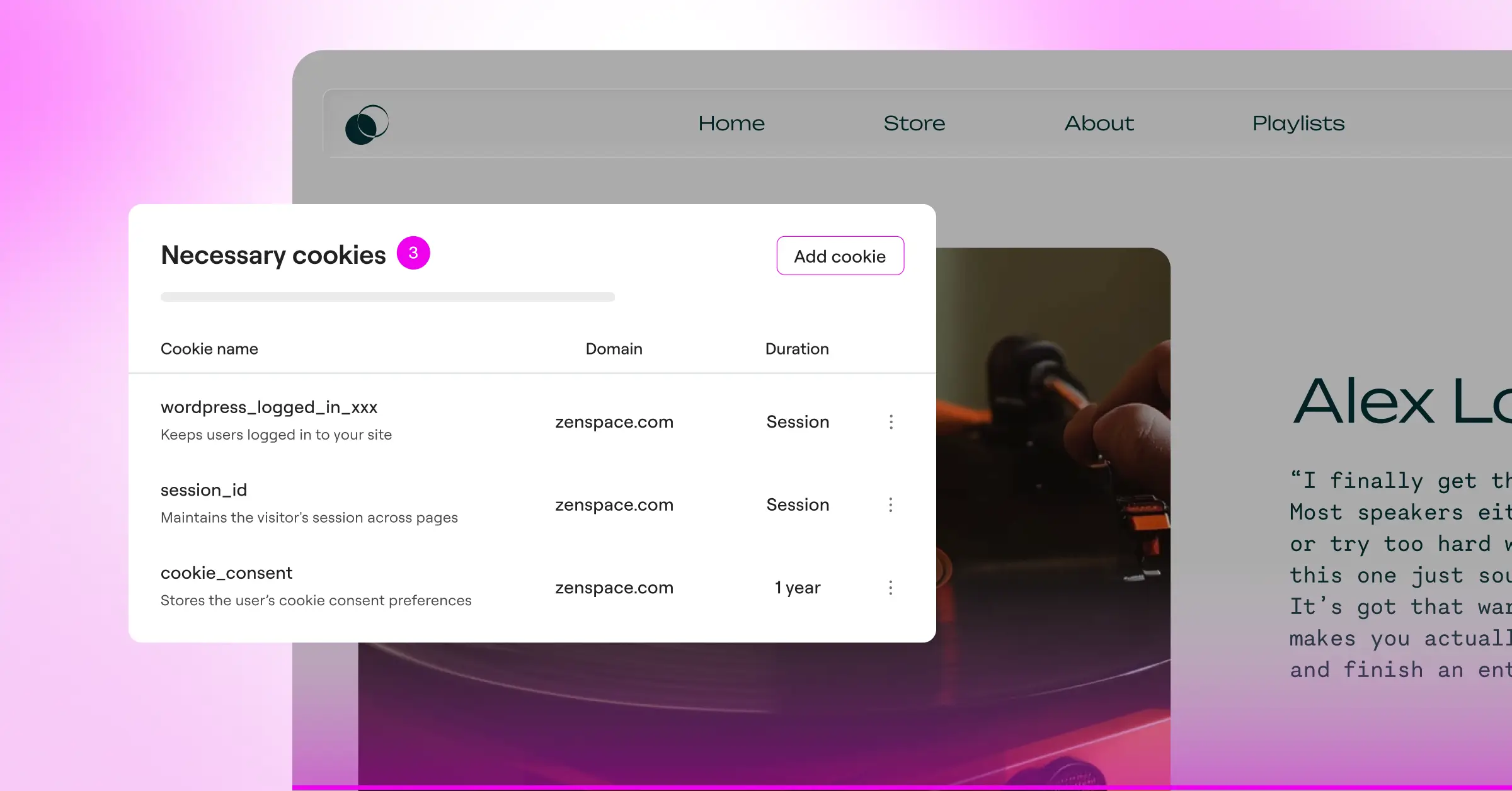
If you build in Elementor, native Cookie Consent brings privacy management into your visual site builder, creating a compliant banner with no third-party scripts or complex styling. Setup takes about five minutes, and the banner matches your theme instantly.
- Integrates with your visual page builder for effortless styling.
- Scans your site to categorize and manage cookies from one interface.
- Supports Google Consent Mode v2 to keep ad tracking compliant.
- Saves local consent logs to help meet audit requirements.
- Targets specific visitor locations using built-in geo-targeting.
- Generates baseline privacy policies through an integrated policy creator.
Cookie Consent is available free, and included in Elementor One.
Pros: Zero external dashboards, matches site design instantly, very lightweight.
Cons: Designed specifically for WordPress sites using the visual builder.
Verdict: A great choice for creators wanting simple, native WordPress compliance.
4. Cookiebot
Cookiebot is a recognized platform managed by Usercentrics. This cloud-based tool crawls your site monthly, cataloging every cookie, and generates a declaration report for your privacy page. It handles Google Consent Mode v2 reliably.
- Crawls your domain monthly to build a complete cookie list.
- Publishes a cookie declaration report on your privacy pages.
- Blocks unauthorized cookies until visitors click accept.
- Determines user location to deliver compliant banners.
- Reports opt-in rates and user actions in a central dashboard.
Cookiebot has a free plan for small sites; paid plans scale with domain and pageview volume.
Pros: Thorough automated crawler, detailed cookie declaration reports.
Cons: Subscriptions can get costly for sites with hundreds of pages.
Verdict: A solid pick for content-heavy sites wanting hands-off, automated cookie reporting.
5. CookieYes
CookieYes is a lightweight, cloud-based consent manager that connects to WordPress through a simple helper, with a clean interface. You manage banners and review consent logs externally, with support for multiple languages and rules like CCPA and GDPR.
- Stores consent logs securely to protect you during audits.
- Translates banner text into over thirty languages.
- Categorizes cookies into necessary, functional, and marketing groups.
- Applies custom style templates to match your site colors.
- Schedules automated scans to keep your tracker list current.
CookieYes offers a free plan; paid plans scale with pageview limits and advanced features.
Pros: Clean and accessible user interface, generous entry-level plan options.
Cons: Custom styling is more limited than visual site builders.
Verdict: A good choice for small businesses wanting an easy external consent system.
6. OneTrust
OneTrust is an industry leader in enterprise data privacy, more a compliance ecosystem than a cookie banner tool, with real depth in data mapping and legal documentation. It can be more than a small WordPress site needs, but it’s established for large corporate brands.
- Coordinates data mapping across your organization.
- Manages data subject access requests (DSAR) through dedicated portals.
- Configures granular compliance setups for distinct global regions.
- Logs consent patterns across websites, apps, and internal systems.
- Audits vendor risk profiles to protect your brand from liability.
OneTrust pricing is tailored to enterprise needs, available on request.
Pros: Deep compliance coverage for enterprise, extensive privacy management tools.
Cons: Very expensive and complex to set up and maintain.
Verdict: Built for enterprise teams managing global corporate privacy risk.
7. Termly
Termly focuses on simple compliance for small businesses and freelancers, combining a cookie consent tool with legal document generators for a terms page, shipping policy, and privacy policy in one system, built for non-lawyers with clear language.
- Generates custom privacy policies, terms of service, and disclaimers.
- Classifies your site cookies using a verified legal database.
- Updates generated policies automatically when laws change.
- Assembles clean cookie banners with basic visual options.
- Saves visitor consent selections for compliance records.
Termly offers a free plan; paid plans unlock advanced features and remove branding.
Pros: All-in-one generator for legal documents, simple setup.
Cons: Banner design options are relatively basic.
Verdict: A practical choice for freelancers and small businesses needing a banner and documents on a budget.
8. Osano
Osano is built around trustworthy compliance, offering a financial compliance guarantee to protect your business from fines, a distinctive feature for growing startups and mid-sized companies. It blocks unapproved scripts before a visitor opts in.
- Guarantees compliance with backed financial protection for qualified plans.
- Blocks marketing scripts and trackers before visitors accept.
- Resolves correct banner layouts based on visitor location.
- Simplifies management of data access and deletion requests.
- Evaluates privacy ratings for vendors on your site.
Osano pricing varies by plan and site volume.
Pros: Compliance guarantee provides peace of mind, privacy-focused architecture.
Cons: Higher entry cost, less suited to low-traffic personal sites.
Verdict: A strong option for growing businesses wanting guaranteed protection.
9. Usercentrics
Usercentrics is a consent management platform with deep customization through developer-friendly APIs, built for custom consent flows across websites, apps, and smart TVs. It integrates with major tag managers, though setups need coding knowledge.
- Collects compliance choices across web, app, and smart TV platforms.
- Customizes interfaces using flexible developer APIs and SDKs.
- Integrates with Google Tag Manager to coordinate script firing.
- Saves audit-proof consent logs for legal documentation.
- Adapts consent rules dynamically to changing regulations.
Usercentrics pricing is available on request, based on sessions and platform needs.
Pros: Flexible for developers, works across multiple platforms and device types.
Cons: Requires technical knowledge to unlock its full potential.
Verdict: Well-suited to companies with development teams building custom consent interfaces.
10. Consent Manager
Consent Manager is an analytics-oriented solution for publishers and media companies relying on ad revenue. Since revenue depends on opt-in rates, it includes A/B testing and conversion analytics to maximize opt-ins compliantly.
- Measures visitor consent rates using built-in reports.
- Runs A/B tests on your banner designs to improve opt-ins.
- Syncs with advertising platforms to coordinate tag behavior.
- Sorts cookies into clear categories based on localized needs.
- Translates banner text into over thirty languages.
Consent Manager pricing is based on monthly sessions and features required.
Pros: Strong analytics and conversion testing, built-in A/B tools.
Cons: The interface is technical with a learning curve.
Verdict: A top choice for publishers maximizing ad revenue through data-driven opt-in optimization.
How to Choose the Best Solution for Your Site
Finding the right tool doesn’t have to be complicated. Just ask a few questions about your site and workflow.
- Where do you want to manage settings? For everything inside your WordPress dashboard, Complianz or native Cookie Consent work best. For one dashboard across non-WordPress sites, iubenda or CookieYes may suit better.
- How much design control do you need? To match your theme styling without code, Elementor‘s built-in Cookie Consent capability is the smoothest route.
- Are you using Google Ads or Analytics? If you target European visitors, make sure your tool supports Google Consent Mode v2 natively, so tracking stays accurate.
- What’s your budget? For a small site, look for a generous entry-level plan, or one already included in your design package, before subscribing.
A few minutes on these questions will point you to a tool that protects your visitors and fits your routine.
Frequently Asked Questions
Do I really need a cookie consent banner on my WordPress site?
Yes. If you have visitors from regions with privacy laws, like the EU (GDPR) or California (CCPA/CPRA), you must get consent before loading non-essential cookies like analytics or ad trackers.
What is Google Consent Mode v2 and is it mandatory?
Google Consent Mode v2 communicates visitor consent choices to Google Analytics and Ads. If you serve EEA visitors and use these tools, it’s mandatory, or you can’t track conversions.
How does Complianz compare to iubenda for multi-site management?
Complianz works locally on each install, so you manage banners site by site. iubenda runs as an external cloud platform, managing sites from one dashboard, handy for multi-platform brands.
Can I build my own custom cookie consent banner without a heavy script?
Yes. Native tools like Cookie Consent from Elementor let you build and style your banner in your site builder, keeping your site fast since it skips external libraries and your workflow simple.
What is the main drawback of using cloud-hosted compliance tools?
You have to manage an external account and copy snippets into your site header. If the cloud service has downtime, your banner might load slowly or fail, one reason some prefer native, self-hosted WordPress options.
How do these tools help during a legal audit?
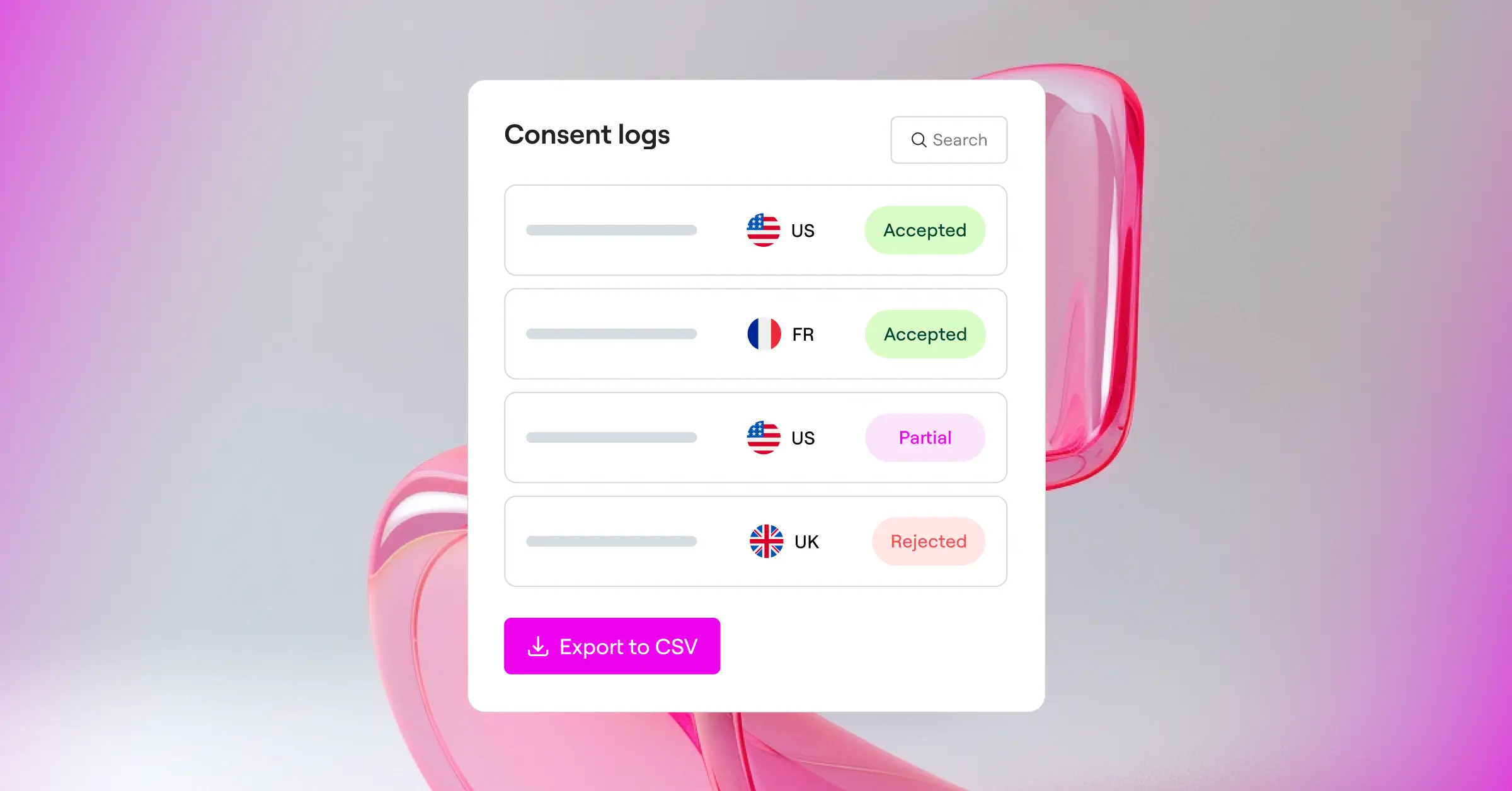
Most cookie consent tools include built-in consent logs, records of when visitors accepted or declined cookies. If a regulator audits your site, these records prove correct practices.
Do cookie consent tools slow down my site loading speeds?
Some external tools with large JavaScript packages can add to page load times, but native, lightweight options have minimal impact. Simple, self-hosted banners keep compliance from hurting performance.
Is there a free option for setting up cookie consent?
Yes, there are several solid free options. Many tools above, including Complianz and CookieYes, offer basic entry-level plans on WordPress.org, and native capabilities like Cookie Consent are often included at no extra cost.

