Table of Contents
You’re probably reading this because your current portfolio isn’t landing you clients. Or maybe you don’t even have one yet. Look, in 2026, a PDF resume just doesn’t cut it anymore. People want to see your work, your process, and your personality all wrapped up in a fast digital experience.
Building a portfolio isn’t just about throwing up some pictures. It’s about proving you can solve problems. the team created well over 147 websites for freelancers and agencies. The one thing that separates the high-earners from everyone else is a portfolio that actually converts traffic into inquiries. We’re going to build exactly that.
Key Takeaways
- WordPress market share currently sits at 43.5%, making it the most stable foundation for your site.
- Users judge your website in 0.05 seconds, so load speed and initial design are critical.
- With 58.67% of traffic coming from mobile devices, a mobile-first design isn’t optional.
- A 1-second delay in page load causes a 7% drop in conversions.
- You’ll need a standard domain (roughly $15/year) and managed hosting (around $20/month).
- Video content on landing pages increases engagement by up to 80%.
Prerequisites What You Need Before Starting
You can’t build a house without a foundation. Before you even think about colors or fonts, you need to get your technical stack in order. Honestly, skipping this step just causes massive headaches later.
First, you need a domain name. A standard .com domain registration costs between $10.99 and $19.99 per year across major registrars. Keep it simple. Use your name or your business name. Don’t try to be clever with weird spellings.
Next comes hosting. Managed WordPress hosting for portfolios typically ranges from $10 to $35 per month. You want a host that offers staging environments and built-in caching. Managed WordPress hosting ensures your site stays online when a big client clicks your link.
You also need your content ready to go. Here’s exactly what you should gather in a folder on your desktop:
- High-resolution images of your past projects (minimum 1920px wide).
- Professional headshots (please, no awkward cropped party photos).
- Client logos you’ve permission to display.
- Written case study copy detailing the problem, process, and results.
- Testimonials from past clients or managers.
You’ll also need an active WordPress installation and an Elementor Editor Pro license. Elementor is currently used by over 16 million active websites. It gives you the advanced design capabilities required to stand out in a crowded market. Plus, it completely removes the need to write custom CSS for every little layout change.
Pro tip: Secure an SSL certificate immediately. Research shows 85% of online shoppers avoid unsecured websites. Browsers will literally block people from viewing your portfolio if you don’t have HTTPS enabled.
Define Your Portfolio Strategy and Niche
Who are you trying to hire you? Are you targeting massive advertising agencies or small local businesses? Your design needs to speak directly to them. A heavily animated, dark-mode site might wow an agency art director. But it might completely confuse a local plumber looking for a simple website redesign.
The freelance market is projected to reach $455 billion by the end of 2026. Competition is fierce. You stand out by being specific.
Don’t fall into the trap of showing everything you’ve ever made. The “Quality over Quantity” rule is absolute here. You should aim for 3-6 high-impact case studies. Anything more is just noise. People remember 65% of visual information three days after seeing it, compared to only 10% of written text. Make those visuals count.
Ask yourself these questions as you plan:
- What’s the single biggest problem I solve for my clients?
- Which 3 projects best represent the type of work I want to do tomorrow?
- What objections do clients usually have before hiring me?
- How can my website answer those objections before we even speak?
Pro tip: If you don’t have 3 strong client projects, build fake ones. A highly detailed concept project for a brand you love is infinitely better than a real project for a client who forced you to make bad design choices.
Setting Up Your WordPress Foundation
Let’s get the software running. Most hosting providers offer one-click WordPress installations right from their control panel. It takes about two minutes. But you still need to configure the core settings correctly.
Before you start adding plugins, you’ve to decide how you’re managing the backend. Here’s a quick breakdown of your hosting options.
| Hosting Type | Average Cost | Performance | Best For |
|---|---|---|---|
| Shared Hosting | $3 – $8 / month | Low to Medium | Absolute beginners on strict budgets. |
| Managed WordPress | $15 – $35 / month | High | Professionals who need speed and staging. |
| Cloud Hosting | $30+ / month | Very High | High-traffic portfolios and agency sites. |
Once WordPress is installed, log into your dashboard. You need to change a few critical settings right away.
- Go to Settings > Permalinks and select Post name. This ensures your URLs look like yoursite.com/my-project instead of yoursite.com/?p=123.
- Navigate to Settings > Reading and check the box that says Discourage search engines from indexing this site. You don’t want Google showing half-finished pages to potential clients. (Just remember to uncheck it when you launch).
- Delete the default “Hello World” post and the sample page. They just clutter your database.
Pro tip: Install a maintenance mode plugin right now. It gives visitors a clean “Coming Soon” screen while you mess around behind the scenes.
Installing and Configuring Elementor Pro
Now we bring in the heavy machinery. The default WordPress editor is fine for writing blog posts. But it’s entirely inadequate for building complex, interactive portfolio layouts. That’s why we’re using Elementor.
You need to install the core software first, then layer the Pro features on top.
- In your WordPress dashboard, go to Plugins > Add New.
- Search for Elementor, click Install, and then click Activate.
- Purchase your Elementor Pro license from the official site and download the .zip file to your computer.
- Go back to Plugins > Add New, click Upload Plugin at the top, and select that .zip file.
- Click Install, then Activate. You’ll be prompted to connect your account and verify your license key.
Stop right there. Don’t start building pages yet. You need to establish your global design system first. If you skip this, you’ll waste hours manually changing fonts on every single page.
Open any page with Elementor, click the hamburger menu in the top left, and select Site Settings. This is your command center.
- Global Colors – Define your Primary, Secondary, Text, and Accent colors here. Stick to a tight palette of 3-4 colors.
- Global Fonts – Set your Typography rules. Choose one clean sans-serif font for headings (like Inter or Roboto) and a highly readable font for body text.
- Layout – Set your default content width. I recommend 1200px for a modern, airy feel.
Pro tip: Install the Hello Theme by Elementor. It’s a forever-free, barebones theme under 30KB. It gets out of the way and lets the builder do the heavy lifting without code conflicts.
Designing the Core Pages
A professional portfolio needs four main pages. Homepage. Work. About. Contact. Keep the navigation dead simple.
Your homepage is your digital elevator pitch. It needs a massive Hero Section right at the top. This section must include a clear headline stating exactly what you do. Don’t say “I create digital dreams.” Say “I design high-converting e-commerce websites for fashion brands.” Follow that with a clear Call to Action (CTA) button.
The Work page (or Portfolio page) is where you show off. You can use the Elementor Portfolio Widget to create a beautiful masonry grid of your projects. If you want more control, use the Loop Builder to design exactly how each project card looks. You can pull in dynamic data like the project title, client name, and featured image automatically.
The About page builds human connection. Clients don’t just hire skills; they hire people they want to work with. Share your professional background, but also drop in a few personal details. It makes you memorable.
Finally, the Contact page. Reduce friction here. Don’t make people fill out 15 fields. Use Elementor Forms to create a simple form asking for Name, Email, and Project Details. Hook it up to your email directly in the widget settings.
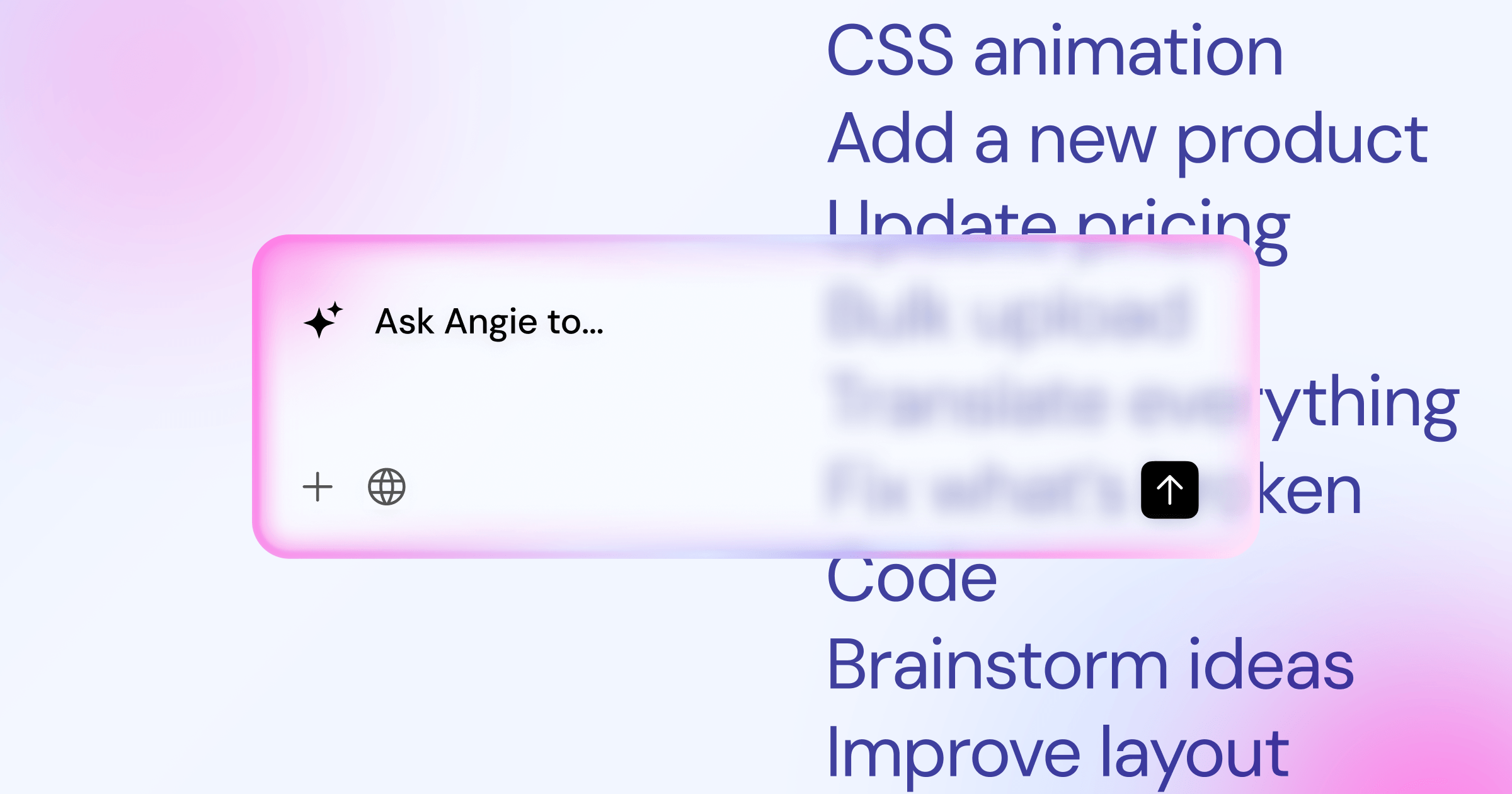
Look, staring at a blank page is intimidating. Sometimes you just need a starting point. This is where agentic AI tools become incredibly useful. Angie is Elementor’s native AI that actually builds production-ready WordPress assets from a conversation. You can literally just tell Angie, “Build a dark-mode contact page with a three-field form and a map,” and it generates the layout right in your environment. It doesn’t just write text; it takes action, saving you hours of structural setup.
Crafting High-Conversion Case Studies
A gallery of nice images isn’t a portfolio. It’s just an art exhibit. Clients want to know how you think. They need to understand your problem-solving process. You achieve this through detailed case studies.
Every single project you post needs to follow the STAR method (Situation, Task, Action, Result). Break your case study page into these specific sections:
- The Problem – What was the client struggling with before they hired you? Be specific. Did they have a 70% bounce rate? Was their branding outdated?
- The Solution – What was your proposed strategy? Why did you choose this specific approach over others?
- The Process – Show the messy middle. Include wireframes, rough sketches, or initial code architecture. Clients love seeing how the sausage is made.
- The Results – This is the most critical part. Include hard data. “Increased traffic by 40%” or “Reduced load time by 3 seconds.”
Building this structure manually for every project is exhausting. Instead, create a Single Post Template in Elementor’s Theme Builder. You design the layout once, adding dynamic widgets for the post title, featured image, and post content. Then, every time you publish a new portfolio piece, it automatically inherits that perfect, high-converting layout.
If you’re struggling to organize your project notes into a cohesive story, this is another spot where Angie excels. You can feed it your messy project data and ask it to structure the content into a professional case study format directly within your WordPress editor.
Optimizing for Performance and Mobile
A beautiful site that takes 8 seconds to load is a dead site. Portfolios taking over 3 seconds to load see a massive 53% abandonment rate. You can’t afford that kind of bounce rate when you’re hunting for clients.
Mobile traffic dictates the web. Currently, 58.67% of global website traffic comes from mobile devices. Your site must look flawless on an iPhone.
Elementor makes this straightforward with its Responsive Mode. Click the device icon at the bottom of the editor panel. You can now tweak settings specifically for tablet and mobile views. You might need to hide a massive background video on mobile, or stack your columns differently. Changes made here won’t affect the desktop design.
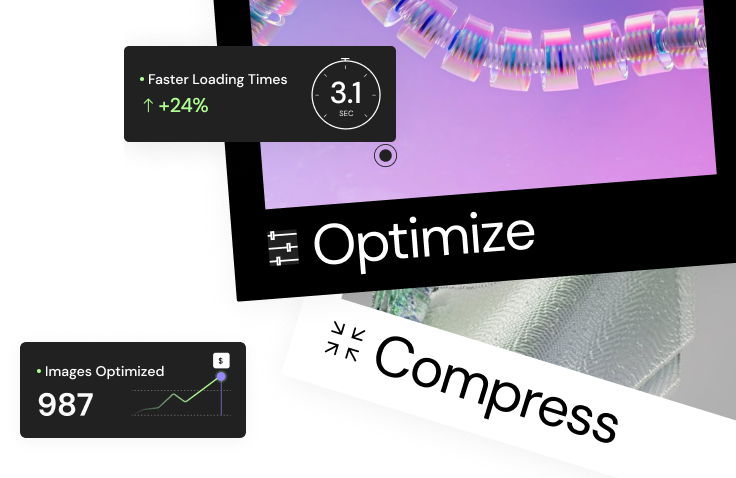
Images are usually the biggest performance killer. High-resolution portfolio shots are heavy. Images account for roughly 50% of total page weight on average. You’ve to compress them.
- Never upload an image larger than you need. If a column is 800px wide, don’t upload a 4000px image.
- Run all assets through a compression tool before uploading.
- Use modern formats. Converting images to WebP formats can reduce image size by 25-34% compared to JPEG without losing visible quality.
Pro tip: Elementor has a built-in Image Optimization plugin available in their ecosystem that handles WebP conversion and compression automatically on upload. It’s a massive time saver.
Final Review, SEO, and Launch
You’re almost there. But pushing the launch button right now is a rookie mistake. You’ve to do a final audit. A broken link on your portfolio tells a client you don’t care about details.
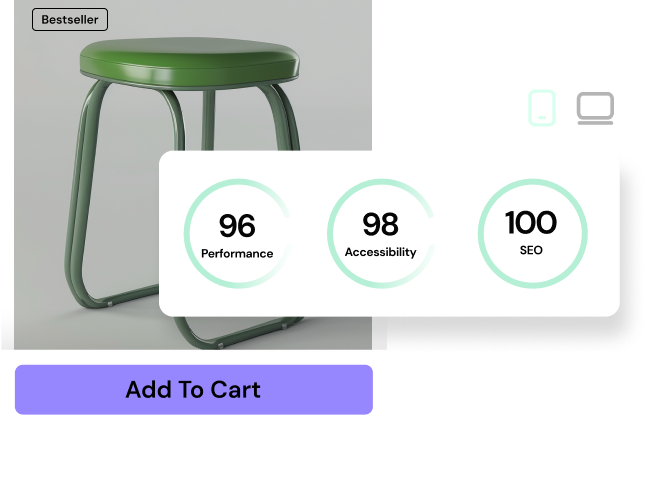
First, tackle your on-page SEO. Your meta titles and descriptions need to be sharp. Don’t just use “Home – John Doe.” Use “John Doe | Freelance UI/UX Designer in Chicago.” Make sure every single portfolio image has descriptive Alt text. This helps visually impaired users and gives search engines context about your work.
Accessibility isn’t just a nice-to-have feature anymore. It’s an absolute necessity. Currently, 96.3% of the top 1 million homepages have detectable WCAG 2 failures. Don’t be one of them. Ensure your text has sufficient color contrast against backgrounds. Check that your site can be navigated using only a keyboard.
Your portfolio is your most important digital asset, but if search engines can’t parse it and users can’t navigate it, your design skills won’t matter. Technical SEO and strict accessibility compliance are what actually put your work in front of paying clients.
Itamar Haim, SEO Team Lead at Elementor. A digital strategist merging SEO, AEO/GEO, and web development.
Once you’ve checked your links across desktop, tablet, and mobile, it’s time to launch. Go back to Settings > Reading and uncheck the box discouraging search engines. Disable your maintenance mode plugin. Send the link to a few trusted friends for a final reality check.
Pro tip: Connect your site to Google Search Console immediately after launch. It forces Google to crawl your new site faster and alerts you to any indexing errors.
Frequently Asked Questions
Why is my Elementor editor not loading?
This is almost always a server memory issue. WordPress needs at least 256MB of memory to run modern builders smoothly. Contact your hosting provider and ask them to increase your PHP memory limit.
How do I fix blurry images in my portfolio?
Blurry images happen when WordPress forcefully scales down your uploads. Check your Elementor image widgets and ensure the ‘Image Size’ dropdown is set to ‘Full’ or ‘Large’, not ‘Thumbnail’ or ‘Medium’.
Can I switch themes after building with Elementor?
Yes, you can. Elementor works with almost any theme. However, changing themes might disrupt your header and footer layouts if you aren’t using Elementor’s Theme Builder to manage them globally.
Do I need to know how to code to use Elementor?
Absolutely not. You don’t need to write a single line of HTML or CSS. The visual editor handles the code generation in the background while you drag and drop elements.
How much does it really cost to maintain this site?
Expect to pay around $15 a year for your domain and $150 to $300 a year for quality hosting. Your software licenses will add to that total, but it’s a necessary business expense for a professional presence.
What if I don’t have enough projects for a portfolio?
Create concept work. Redesign a local business’s terrible website (don’t send it to them, just use it as a case study). Build an app interface for a fictional product. Clients evaluate your skills, not just your client roster.
Should I put my prices on my portfolio?
It depends entirely on your strategy. Posting prices filters out low-budget clients immediately, saving you time. But keeping prices hidden allows you to quote based on the specific value of the project. Most high-end freelancers prefer the latter.
How do I backup my portfolio website?
Never rely solely on your host for backups. Install a plugin like UpdraftPlus and schedule automatic weekly backups to an off-site location like Google Drive or Dropbox. If the server crashes, you won’t lose your work.
Is a one-page portfolio enough?
For absolute beginners, yes. A strong single-page site with anchor links to different sections is better than a multi-page site filled with thin, weak content. You can always add dedicated case study pages later as you grow.
Looking for fresh content?
By entering your email, you agree to receive Elementor emails, including marketing emails,
and agree to our Terms & Conditions and Privacy Policy.