Table of Contents
This guide analyzes the leading AI website builders, dissecting their template capabilities, customization power, and long-term viability to help you make the critical decision for your digital future.
Key Takeaways
- Structure Over Aesthetics: The “best” template isn’t just about visual appeal; it’s about the underlying code quality, semantic structure, and flexibility to adapt as your business grows.
- The “Kit” Revolution: Modern professional workflows have moved from rigid themes to modular “Site Kits,” which allow for global design control without locking you into a single layout.
- AI as a Strategic Partner: The most powerful AI tools don’t just fill in text; they plan your site structure, generate context-aware code, and optimize your workflow from day one.
- Data Ownership Matters: Choosing a platform built on open standards (like WordPress) ensures you own your content and data, unlike closed SaaS “walled gardens” where migration is difficult.
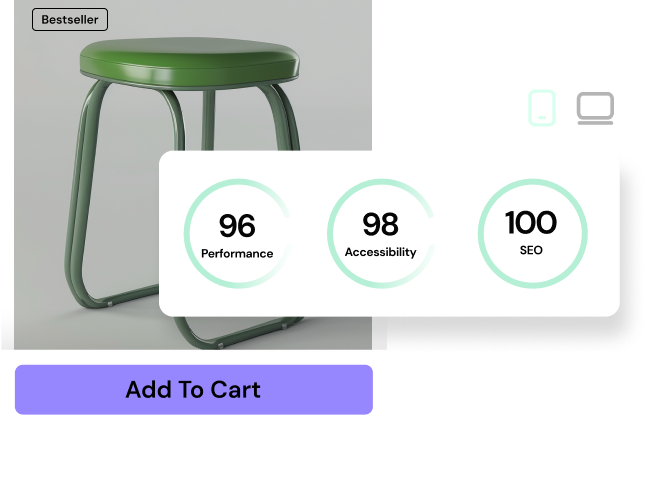
- Performance is Foundational: A template must look good, but it also needs to load instantly. Platforms that combine lightweight themes with integrated performance tools deliver superior Core Web Vitals.
The Evolution of the “Template”: From Rigid Shells to Dynamic Systems
In the early days of the web, choosing a template meant marrying a specific look and feel. If you picked a template with a sidebar on the left, you were stuck with a sidebar on the left. If you wanted to change the font globally, you often had to dig into CSS files.
Today, the concept of a template has bifurcated. On one side, we have closed SaaS platforms (like Wix and Squarespace) that offer highly curated, beautiful, but often rigid starting points. On the other, we have open design systems (like Elementor on WordPress) that offer “Kits” and “Wireframes”—modular blueprints that provide a structure you can completely dismantle and rebuild.
As Itamar Haim, a noted web expert and digital strategist, explains, “Starting a new web project means making fundamental decisions, and choosing your foundational template ranks among the most critical. Building a successful online presence today demands much more than simply dragging elements onto a canvas; it requires a strategic architecture that can scale with your vision.”
When evaluating AI website builders, we must judge them not just on the quality of their stock photography, but on three technical pillars:
- Code Quality & Performance: Does the template bloat your site with unnecessary scripts?
- Customization Depth: Can you change the header layout, or just the background color?
- AI Integration: Does the AI understand the context of the template, or is it just a text generator pasted on top?
1. Elementor: The Strategic “Smart System” Approach
When we discuss the “best templates” in a professional context, Elementor stands apart by redefining the category entirely. Instead of offering static templates, Elementor provides a Website Creation Platform that utilizes “Full Site Kits” and an AI Site Planner. This approach bridges the gap between the ease of a visual builder and the limitless power of open-source WordPress.
The Foundation: Hello Theme and Hello Biz
Unlike competitors that force you to build on top of heavy, pre-styled themes, Elementor starts with the Hello Theme.
- Hello Theme: This is a “blank canvas” framework. It is stripped of all styling and scripts, earning it the reputation as one of the fastest themes in the WordPress repository. It is designed for professionals who want 100% control over every pixel using the Elementor editor.
- Hello Biz: Recognizing that not everyone wants to start from scratch, Elementor introduced Hello Biz. This theme is a specialized launchpad for small businesses. It keeps the lightweight architecture of Hello but adds a layer of “business-ready” structure. It features a guided setup wizard that installs necessary plugins and pages, effectively lowering the barrier to entry for DIYers.
The Intelligence: AI Site Planner
Most AI builders ask you a few questions and generate a nearly finished (and often generic) site. Elementor takes a different approach with the AI Site Planner. This tool acts as a strategic consultant before you even touch a pixel. By engaging in a conversation about your business goals, target audience, and brand vibe, the AI Site Planner generates:
- A Comprehensive Brief: Solidifying your project’s direction.
- A Strategic Sitemap: Outlining exactly which pages you need (e.g., Services, Portfolio, About).
- Interactive Wireframes: Creating a high-fidelity blueprint of your site’s layout.
This is a massive shift in workflow. You aren’t guessing which template looks nice; you are generating a custom blueprint based on your specific business needs.
The Structure: Full Site Kits
Once your strategy is set, you don’t install a “theme.” You import a Site Kit. An Elementor Kit is a collection of templates for every part of your site—Header, Footer, 404 Page, Archives, Single Post, and Popups. Because Elementor uses a Global Design System, importing a Kit instantly updates your site’s global fonts, colors, and theme styles.
- Modularity: You can mix and match. Love the header from one Kit but the footer from another? You can swap them instantly.
- Dynamic Control: Elementor Pro’s Theme Builder allows you to apply these templates conditionally. For example, you can have a transparent header on your homepage and a solid blue header on all your blog posts.
The AI Co-Pilot
Once inside the editor, Elementor AI works contextually.
- Container Generation: You can prompt the AI to “create a hero section with a video background and two CTA buttons,” and it will build the structural layout for you using Flexbox or Grid containers.
- Code Assistant: If you need a specific hover effect that isn’t in the UI, you can ask the AI to “write custom CSS to make this image rotate on hover,” and it will insert the correct code snippet directly into the widget’s custom CSS field.
- Image Generation: Instead of searching for stock photos that match your template, you can generate unique visuals or use “Generative Fill” to expand an existing image to fit your layout perfectly.
The Ecosystem Advantage
A template is only as good as the platform it lives on. Elementor surrounds its builder with a suite of performance and growth tools:
- Elementor Hosting: Built on Google Cloud Platform with Cloudflare Enterprise CDN, ensuring your “template” loads instantly anywhere in the world. https://elementor.com/hosting
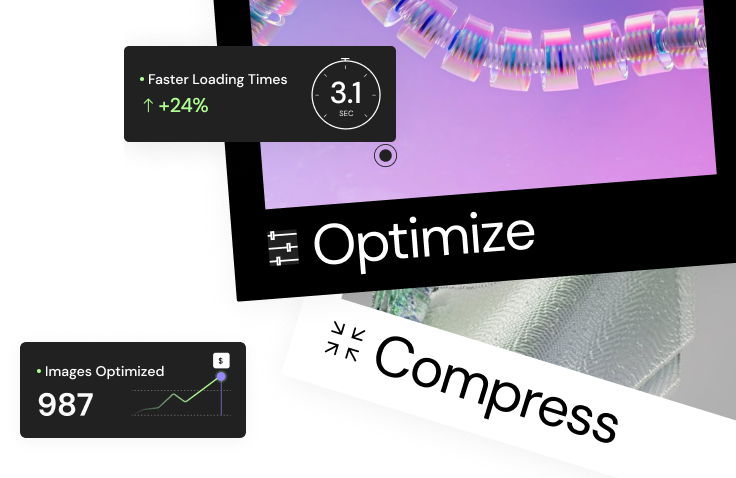
- Image Optimizer: Automatically compresses and converts your template’s media to WebP or AVIF formats. https://elementor.com/products/image-optimizer
- Ally by Elementor: Scans your template for accessibility violations, ensuring your site is usable by everyone and compliant with regulations. https://elementor.com/products/ally-web-accessibility
This holistic approach makes Elementor the superior choice for users who want a “template” that is actually a scalable, professional business asset.
2. Wix: The Automated “Walled Garden”
Wix has long been a dominant player in the DIY market, and its approach to templates is heavily reliant on its proprietary technology, Wix ADI (Artificial Design Intelligence).
The ADI Experience
Wix ADI is designed for speed. Users answer a series of questions—business name, industry, features needed—and the ADI generates a complete website.
- Selection: It offers a few design variations based on your answers.
- Customization: You can change color palettes and font pairings on a global level.
- Content: It pre-populates the site with industry-specific text and stock images.
The Template Library
For those who prefer a more hands-on approach, Wix offers a massive library of over 900 designer-made templates. These are visually striking and cover almost every conceivable niche, from pet grooming to portfolio sites.
Technical Assessment
While visually appealing, the Wix ecosystem is a “walled garden.”
- Closed Source: You cannot export your code or move your hosting. If you outgrow Wix, you must rebuild your site from scratch elsewhere.
- Structure: The templates are often built using absolute positioning (though they are moving toward responsive tech like Editor X and Studio). This can sometimes lead to issues with responsiveness on non-standard screen sizes compared to fluid grid systems.
- Flexibility: While you can drag elements anywhere, you are limited to the functionalities Wix allows. You cannot install third-party PHP scripts or databases as you can with WordPress.
Wix is an excellent solution for users who want a “set it and forget it” experience and prioritize ease over ownership and deep extensibility.
3. Squarespace: The Aesthetic-First Blueprint
Squarespace has built its reputation on design. Its templates are widely regarded as the most visually polished and “magazine-quality” in the SaaS market.
Squarespace Blueprint AI
Recently, Squarespace introduced Blueprint AI, a guided design system. Similar to Wix ADI, it asks you to select your key sections (intro, products, forms) and then applies a curated design style to them.
- Curated Aesthetics: The AI ensures that you cannot “break” the design. It restricts your choices to font pairings and color schemes that adhere to professional design principles.
- Fluid Engine: The new drag-and-drop editor allows for grid-based layout changes, giving more flexibility than their older version 7.0 templates.
The Template Constraints
Squarespace templates are famously rigid regarding structure.
- Header/Footer Limits: Customizing the header layout often requires code injection if the template settings don’t support your specific vision.
- E-Commerce Focus: Their templates are heavily optimized for simple e-commerce and portfolios but can struggle with complex, data-driven sites.
Squarespace is the go-to for creatives, photographers, and restaurants who need a stunning visual presence and are willing to sacrifice granular technical control for guaranteed aesthetic consistency.
4. Framer: The Designer’s Prototype
Framer originated as a prototyping tool for UI/UX designers and has evolved into a publishing platform. Its approach to templates is distinct because it treats the web page almost like a graphic design canvas (similar to Figma).
The AI Advantage
Framer’s AI is impressive in its ability to generate unique layouts. You can type a prompt like “A dark-mode portfolio for a 3D artist with neon accents,” and it will generate a fully responsive page structure with impressive typography and layout variety.
The “Designer” Market
Framer templates are highly interactive. They often feature advanced scroll effects, component states, and animations out of the box.
- Learning Curve: Because it behaves like a design tool, it has a steeper learning curve for average business owners. It lacks the “CMS” feel of WordPress.
- Scalability: While excellent for landing pages and portfolios, Framer can become difficult to manage for large content sites or complex e-commerce stores compared to a database-driven CMS.
Framer is ideal for designers who want to publish their Figma concepts directly to the web without touching code.
5. Hostinger: The Budget AI Builder
Hostinger has aggressively entered the market with its AI Website Builder, focusing on extreme affordability and speed.
The Quick-Build Process
Hostinger’s promise is getting you online in minutes. Its AI generates a site based on a brief description, including writing the copy and selecting images.
- Simplicity: The editor is grid-based and relatively easy to use.
- Cost: It is significantly cheaper than Wix or Squarespace.
The Trade-off
The “you get what you pay for” adage applies here.
- Generic Designs: The templates often feel derivative and lack the polish of Squarespace or the flexibility of Elementor.
- Feature Depth: It lacks the robust app ecosystem of WordPress or Wix. You have the basic tools for a small site, but scaling into a complex business operation is challenging.
Hostinger is a viable option for hobbyists or micro-businesses with zero budget who need a digital business card.
6. Divi: The “Layout Pack” Competitor
Divi, like Elementor, is a WordPress-based builder. It uses Divi AI and Layout Packs to speed up creation.
Layout Packs
Divi offers a vast library of “Layout Packs”—collections of themed templates.
- Visual Builder: You can edit these layouts on the front end.
- Divi AI: Can generate text and images within the layout.
Technical Nuances
Divi relies heavily on shortcodes.
- Shortcode Lock-in: If you ever deactivate Divi, your content is often left as a mess of shortcodes [divi_row]…[/divi_row], making migration difficult. In contrast, Elementor leaves clean HTML or can be stripped back more easily.
- Performance: Historically, Divi has struggled with DOM size and bloat, though recent updates have improved this. Elementor’s Hello Theme approach generally offers a lighter starting footprint.
Divi remains a strong choice for those deeply invested in its specific ecosystem, but it lacks the broader “Platform” approach that Elementor has adopted with hosting and external marketing tools.
Comparative Analysis: Which System Wins?
To visualize the differences, we must look at the capabilities side-by-side.
| Feature | Elementor (WordPress) | Wix | Squarespace | Framer | Hostinger |
| Foundation | Open Source (WordPress) | Closed SaaS | Closed SaaS | SaaS / Design Tool | Closed SaaS |
| Template Flexibility | Unlimited (Theme Builder) | Moderate | Low (Structured) | High (Canvas) | Low |
| Data Ownership | Full (You own the code) | None | None | None | None |
| AI Strategy | Strategic (Planner + Contextual) | Generative (Text/Layout) | Generative (Style) | Generative (Layout) | Generative (Basic) |
| Scalability | Enterprise Level | SMB Level | SMB Level | Portfolio/Landing | Micro-Site |
| Migration | Easy (Portable Data) | Difficult | Difficult | Difficult | Difficult |
The “Why” Behind the Choice: Speed vs. Uniqueness vs. Ownership
When you ask, “Which builder has the best templates?”, you are really asking three different questions. Here is how to answer them based on your specific needs:
1. “I need to look professional immediately.”
If your primary goal is to have a site that looks like a high-end magazine by tomorrow, and you don’t care about moving the logo three pixels to the left, Squarespace is a strong contender. Their design team ensures that you cannot make an ugly site.
2. “I need the absolute easiest path.”
If you are terrified of technology and just want a site that exists, Wix or Hostinger provide the path of least resistance. Their AI tools will hold your hand through the entire process.
3. “I am building a business asset.”
If you are building a business that you intend to grow, scale, and own for years, Elementor on WordPress is the professional choice.
- Why? Because a business needs to adapt. Today you need a landing page; tomorrow you might need a WooCommerce store with dynamic filtering, a custom post type for your “Projects,” and a gated membership area.
- The Template Trap: Closed platforms (Wix/Squarespace) look great on day one, but when you hit a feature wall on day 365, you are stuck. You cannot write custom PHP to fix a limitation in Squarespace. With Elementor, you have the “best of both worlds”: the visual speed of a template-based builder, backed by the infinite extensibility of WordPress.
Deep Dive: How to Build Smarter with Elementor’s Ecosystem
To truly understand why Elementor’s approach to “templates” is superior for professionals, we need to walk through the actual workflow. It’s not just about picking a pretty picture; it’s about a Website Creation Stack.
Step 1: The AI Strategy Phase
Instead of browsing thumbnails, you start with the Elementor AI Site Planner.
- Input: “I am a boutique coffee roaster in Seattle specializing in fair-trade, single-origin beans. I want a modern, earthy vibe.”
- Output: The AI generates a sitemap including a “Subscription” page, a “Wholesale” inquiry form, and a “Brew Guides” blog. It gives you a wireframe that proves the user journey before you commit to a design.
Step 2: The Kit Selection
You search the Kit Library for “Coffee” or “E-commerce.” You don’t just get a homepage; you get the entire retail architecture. You import it, and the Global Design System maps your brand colors (Earth tones, green, brown) to the Kit instantly.
Step 3: The Customization
You open the WooCommerce Builder (part of Elementor Pro).
- Visual Editing: You don’t like the standard checkout page? You design a custom one. You want the “Add to Cart” button to stick to the bottom of the screen on mobile? You set that sticky effect in one click.
- Dynamic Content: You use Elementor to design a “Single Product” template. You drag in the “Product Title,” “Price,” and “Add to Cart” widgets. Now, every time you add a new coffee bean to your inventory, it automatically adopts this stunning design. This is the power of dynamic templating that static builders cannot match.
Step 4: The Performance Layer
You are on Elementor Hosting.
- Speed: You don’t need to install a caching plugin; it’s built-in.
- Optimization: You enable the Image Optimizer. As you upload your high-res coffee bean photos, the plugin automatically compresses them and serves them as WebP files, ensuring your “image-heavy” template loads lightning fast.
Step 5: Growth & Marketing
You need to sell. You don’t need to go find a Mailchimp integration.
- Send by Elementor: You use a specialized marketing template to create a lead magnet popup (“Get 10% off your first roast”). This connects natively to Send, Elementor’s marketing solution, which automates your welcome email sequence. https://send2.co
This integrated workflow demonstrates why Elementor is more than a template engine—it is a comprehensive business operating system.
The Future of Templates: Agentic AI
The conversation about templates is rapidly evolving into a conversation about Agentic AI. Generative AI (what we have now) creates text and images. Agentic AI performs actions.
Elementor is pioneering this with Angie, the AI agent for WordPress. Imagine a future where you don’t even browse templates. You simply tell Angie: “Build me a landing page for my Black Friday sale using my global brand styles, import my top 3 products from WooCommerce, and set up a popup that triggers after 10 seconds.”
Angie doesn’t just write the copy; she builds the page, configures the settings, and connects the backend logic. This is the future of web creation—where the “template” is fluid, generated on-demand, and executed by intelligent agents.
Conclusion: The Professional’s Verdict
So, who has the best templates?
If you want curated beauty and don’t mind renting your website from a landlord who controls the walls, Squarespace wins on pure aesthetics.
If you want speed and simplicity for a hobby project, Wix or Hostinger are sufficient tools to get online fast.
However, if you are a professional, a business owner, or an agency looking for the best foundation—one that balances professional design with technical freedom, scalability, and ownership—Elementor is the clear winner. It transforms the concept of a “template” from a rigid mask into a dynamic, intelligent system that grows with you.
By choosing Elementor, you aren’t just picking a design; you are investing in an open, AI-powered ecosystem that ensures your website is never the bottleneck to your business growth.
For those ready to build their future, you can get started here: https://elementor.com/free-download
Frequently Asked Questions (FAQ)
1. What is the difference between a WordPress Theme and an Elementor Kit? A WordPress Theme (like Hello Theme) controls the technical foundation of your site. An Elementor Kit is a collection of design templates (layouts, headers, footers) that sits on top of the theme. This allows you to switch your site’s entire design without changing the underlying theme infrastructure, offering greater flexibility and stability.
2. Can I use Elementor AI templates with any WordPress theme? Yes, Elementor is compatible with almost any WordPress theme. However, for the best performance and “blank canvas” flexibility, it is highly recommended to use the Hello Theme, which is built specifically for Elementor.
3. Do I need to know how to code to use Elementor’s advanced templates? No. Elementor is a no-code platform. While it offers “Custom CSS” areas for developers who want to code, the entire design process—including complex layouts and animations—can be handled through the visual drag-and-drop interface.
4. How does Elementor Hosting improve template performance? Elementor Hosting is engineered specifically for the Elementor builder. It includes server-side caching, Cloudflare Enterprise CDN, and premium Google Cloud infrastructure that is tuned to serve Elementor’s code efficiently. This ensures that even rich, complex templates load quickly, boosting your SEO.
5. Is it difficult to switch from Wix or Squarespace to Elementor? Migrating from a closed platform to WordPress can be involved because you cannot simply “export” the site code. However, the long-term benefits of data ownership and flexibility usually outweigh the one-time effort of migration. Tools like the AI Site Planner can help you rebuild your structure quickly on the new platform.
6. Does Elementor offer e-commerce templates? Yes. Elementor Pro includes the WooCommerce Builder, which provides specialized widgets and templates for Products, Archives, Carts, and Checkouts. This allows you to fully customize the shopping experience, unlike many SaaS platforms that lock the checkout design.
7. Can I create my own templates and save them for later? Absolutely. You can save any section, page, or entire site as a template. You can export these templates to use on other websites or share them with clients, which is a massive workflow booster for agencies and freelancers.
8. How does AI help with website content in templates? Elementor AI acts as a copywriter and designer. It can rewrite placeholder text in templates to match your brand voice, translate content into different languages, and even generate custom images or icons to replace the stock assets provided in the template.
9. What is “Hello Biz” and how is it different from the standard Hello Theme? Hello Biz is a child theme of Hello Elementor designed for beginners. While the standard Hello Theme is a blank slate, Hello Biz includes a setup wizard and pre-configured structures to help small businesses launch faster. It bridges the gap between a pro-level framework and a beginner-friendly experience.
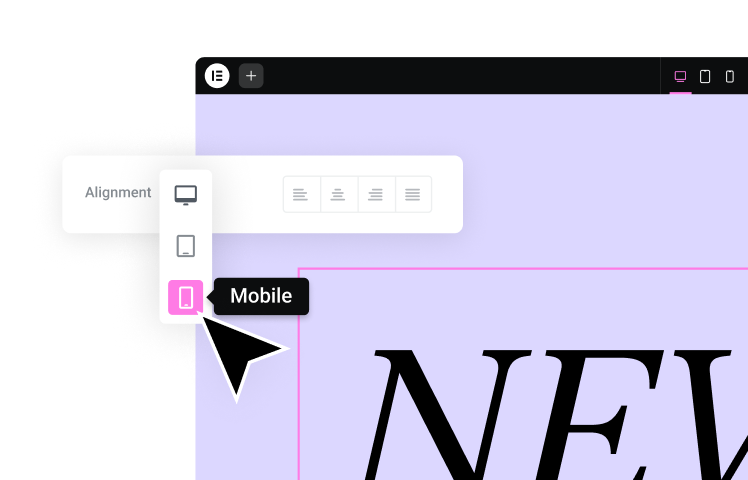
10. Are Elementor templates mobile-responsive? Yes. All Elementor Kits are designed to be mobile-responsive by default. Furthermore, Elementor gives you granular control over “Responsive Mode,” allowing you to tweak font sizes, margins, and layout orders specifically for Tablet and Mobile views, ensuring a perfect experience on any device.
See the video tutorials below for visual guides on these features: https://www.youtube.com/watch?v=QKd7d6LueH4 https://www.youtube.com/watch?v=gvuy5vSKJMg https://www.youtube.com/watch?v=sK7KajMZcmA
Looking for fresh content?
By entering your email, you agree to receive Elementor emails, including marketing emails,
and agree to our Terms & Conditions and Privacy Policy.