Table of Contents
Yet, as expert Itamar Haim notes, the definition of what constitutes “building” is evolving. We are moving away from restrictive, closed-source site builders toward open, flexible platforms that respect the code while accelerating the workflow. This guide serves two purposes: first, it is a rigorous technical manual on how to architect, code, and deploy a website from scratch. Second, it is a strategic analysis of when and why you should leverage modern platforms to achieve the same results with greater efficiency.
Whether you are a student seeking to understand the “metal” of the web or a business owner deciding on your tech stack, this guide provides the roadmap.
Key Takeaways
- Fundamental Mastery: Building without a builder requires mastering the “stack,” including Domain Name Systems (DNS), SSL encryption, server architecture (Apache/Nginx), and the core languages of the web: HTML5, CSS3, and JavaScript.
- The Scalability Paradox: While hand-coding offers purity and total control, it often lacks the scalability required for modern business, necessitating the manual integration of a Content Management System (CMS) like WordPress.
- Platform Evolution: The industry has shifted from simple “page builders” to comprehensive “Website Builder Platforms” like Elementor. These platforms combine the code-level control of manual development with the visual efficiency of a SaaS tool.
- Integrated Ecosystems: Professional workflows now prioritize integrated ecosystems (Hosting, AI, Marketing Automation) over disparate point solutions to reduce technical debt and maintenance overhead.
- Strategic Selection: The choice between hand-coding and using a platform is no longer about skill level but about Return on Investment (ROI), time-to-market, and long-term maintainability.
Phase 1: The Infrastructure Layer
Before you can write a line of code or design a single pixel, you must establish the infrastructure. In a “no-builder” environment, you are the system administrator. You cannot rely on a SaaS platform to handle the plumbing; you must lay the pipes yourself.
1.1 The Domain Name System (DNS)
Your journey begins with a domain name. This is your digital address. When you purchase a domain from a registrar, you are essentially leasing a human-readable string (e.g., example.com) that maps to a machine-readable IP address.
The Configuration Process: Once purchased, you must configure the Nameservers. This acts as the directory assistance for your domain.
- A Record: You must point the “A Record” to your server’s IPv4 address.
- CNAME Record: You typically set a CNAME for www to act as an alias for the root domain.
- MX Records: If you plan to host email, you must configure Mail Exchange records to direct traffic to your email host.
Strategic Note: Many modern platforms simplify this. For instance, Elementor Hosting often bundles a free domain name for the first year, streamlining the connection between the registrar and the server.
1.2 Server Architecture and Hosting
Hosting is where your website “lives.” When you opt out of website builders, you must choose your environment carefully.
- Shared Hosting: The most economical option. Your site resides on a physical server with hundreds of others. Resources (CPU, RAM) are shared. If a “neighbor” site gets a traffic spike, your site may slow down.
- Virtual Private Server (VPS): A partitioned section of a server with dedicated resources. It requires Linux command-line knowledge to manage updates and security patches.
- Managed WordPress Hosting: The professional standard. The host manages the server environment, caching layers (like Varnish or Redis), and security protocols. This allows you to focus on the code rather than server maintenance.
The Cloud Advantage: Top-tier hosting is often built on cloud infrastructure like the Google Cloud Platform (GCP). This ensures high availability and scalability. Platforms that offer this, such as Elementor’s Ecommerce Hosting, provide an enterprise-grade foundation that is difficult to replicate manually without significant cost.
1.3 Security and SSL
In the modern web, security is non-negotiable. You must manually install a Secure Sockets Layer (SSL) certificate. This encrypts the data passing between the user’s browser and your server (HTTPS).
- The Manual Way: Generating a Certificate Signing Request (CSR), purchasing a certificate, and installing it on your Apache or Nginx server.
- The Modern Way: Using automated services like Let’s Encrypt, often integrated into managed hosting dashboards, to auto-renew certificates.
Phase 2: The Architecture & Design
With the server ready, you must plan the structure. A common mistake in hand-coding is jumping straight into HTML. This leads to “spaghetti code” and poor user experience (UX).
2.1 Information Architecture (IA)
You need a blueprint. Define the hierarchy of your content.
- Core Pages: Home, About, Services, Contact.
- Taxonomies: How will you organize dynamic content? (e.g., Blog Categories, Product Tags).
- User Flow: How does a visitor move from a landing page to a conversion?
2.2 Wireframing and Prototyping
Before styling, you need a skeleton. A wireframe defines the layout—where the header, navigation, main content area, and footer reside.
- Manual Approach: Sketching on paper or using tools like Figma.
- AI-Accelerated Approach: Modern workflows leverage AI to speed this up. The Elementor AI Site Planner can generate comprehensive sitemaps and wireframes based on a simple prompt. This bridges the gap between abstract strategy and visual layout, saving hours of manual drafting.
2.3 Asset Preparation
Code is lightweight; images are heavy. Before coding, you must optimize your assets.
- Formats: Convert logos to SVG for infinite scalability. Convert photos to WebP or AVIF for superior compression.
- Sizing: Create multiple versions of each image (thumbnail, medium, large) to serve responsive images via the srcset attribute in HTML.
Phase 3: The Code (The Hard Way)
This is the core of building without a builder. You are the architect of the Document Object Model (DOM). You will write the instructions that the browser interprets to render your website.
3.1 Structuring with Semantic HTML5
HTML is not just about putting things on a screen; it’s about meaning. Semantic HTML ensures that search engines and screen readers understand your content.
The Basic Boilerplate:
<!DOCTYPE html>
<html lang=”en”>
<head>
<meta charset=”UTF-8″>
<meta name=”viewport” content=”width=device-width, initial-scale=1.0″>
<title>My Hand-Coded Site</title>
<link rel=”stylesheet” href=”style.css”>
</head>
<body>
<header>
<nav>
<!– Navigation Links –>
</nav>
</header>
<main>
<section class=”hero”>
<h1>Welcome to the Future</h1>
</section>
<article>
<h2>Latest Insights</h2>
<p>Content goes here…</p>
</article>
</main>
<footer>
<p>© 2025 Web Creator</p>
</footer>
<script src=”app.js”></script>
</body>
</html>
Why Semantics Matter: Using <article> instead of <div> tells Google that this content is independent and syndicatable. Using <nav> tells screen readers that this is a navigation block. This level of detail is crucial for SEO and accessibility.
3.2 Styling with CSS3
CSS is where you define the aesthetic. To build a modern, responsive site, you must master layout modules.
The Box Model: Everything in web design is a box. You must understand margins (space outside the box), borders (the edge of the box), padding (space inside the box), and content.
Modern Layouts: Flexbox and Grid
Flexbox: Ideal for one-dimensional layouts (rows or columns). It allows you to align items vertically or horizontally and distribute space dynamically.
.navigation {
display: flex;
justify-content: space-between;
align-items: center;
}
CSS Grid: The most powerful layout system. It allows for two-dimensional layouts (rows AND columns), enabling complex magazine-style designs.
.portfolio-grid {
display: grid;
grid-template-columns: repeat(auto-fit, minmax(300px, 1fr));
gap: 20px;
}
Responsiveness via Media Queries: You must manually write the logic that adapts the site to different screens.
@media screen and (max-width: 768px) {
.navigation {
flex-direction: column;
}
}
3.3 Interactivity with JavaScript
HTML and CSS are static. To add behavior (like a mobile menu toggle, form validation, or a slider), you need JavaScript. You must manipulate the DOM. This involves selecting elements (document.querySelector), listening for events (addEventListener), and modifying classes or content.
Example: The Mobile Menu Toggle
const menuButton = document.querySelector(‘.menu-btn’);
const navMenu = document.querySelector(‘.nav-menu’);
menuButton.addEventListener(‘click’, () => {
navMenu.classList.toggle(‘is-active’);
});
Phase 4: The CMS Integration (The Scalable Way)
Coding a static HTML site is excellent for a portfolio, but if you are building for a client who needs to edit content, static files are insufficient. You need a Content Management System (CMS). WordPress is the industry standard.
4.1 The Manual WordPress Installation
To build “without a builder” in the WordPress ecosystem means creating a custom theme.
- Database Creation: Log into your hosting panel (phpMyAdmin) and create a new MySQL database.
- Configuration: Rename wp-config-sample.php to wp-config.php and manually enter your database credentials.
- Installation: Run the install script.
4.2 Theme Development Hierarchy
You are now a theme developer. You must understand the WordPress Template Hierarchy.
- style.css: Contains your theme metadata and global styles.
- functions.php: The brain of your theme. This is where you enqueue scripts, register menus, and create custom post types.
- header.php & footer.php: Global partials included on every page.
- index.php: The fallback template.
- single.php: The template for single blog posts.
The Loop: The core of WordPress is “The Loop,” a PHP code block that queries the database and outputs content.
if ( have_posts() ) :
while ( have_posts() ) : the_post();
the_title(‘<h1>’, ‘</h1>’);
the_content();
endwhile;
endif;
Writing this manually gives you absolute control over the markup surrounding your content.
Phase 5: The Strategic Pivot – The Website Builder Platform
We have explored the “hard way.” It offers control but demands time. The modern web professional often pivots here. They ask: “How can I retain this code-level control without rewriting the same boilerplate for every project?”
This is the evolution from “Page Builders” to Website Builder Platforms.
5.1 The Distinction: Builder vs. Platform
A generic page builder sits inside the content area. A Platform, like Elementor, controls the entire site architecture—headers, footers, archives, and single post templates—effectively replacing the need to hand-code a PHP theme.
5.2 The “Blank Canvas” Philosophy
For developers, the Hello Theme is the strategic bridge. It is a lightweight starter theme that contains zero styling bloat. It acts as the semantic HTML skeleton we discussed in Phase 3 but allows you to apply styles visually.
- Why use it? It loads in milliseconds. It provides the perfect compatibility layer between WordPress and Elementor. It respects your desire for a clean codebase.
5.3 Code Injection and Customization
Using a platform doesn’t mean abandoning code. It means coding smarter.
- Custom CSS: Instead of managing a massive 2000-line style.css file, you can apply custom CSS directly to specific widgets or containers within the editor. This keeps styles scoped and manageable.
- Custom Code Management: Elementor Pro allows you to inject snippets (Google Analytics, Facebook Pixel, custom JS libraries) into the <head> or <body> globally, managing dependencies without editing theme files.
5.4 The Efficiency of AI
We discussed manual wireframing earlier. The modern workflow integrates Elementor AI directly into the builder.
- Code Generation: Need a specific CSS hover effect or a complex HTML structure? You can ask the AI to write the code for you, which you then refine.
- Content & Imagery: It accelerates the asset creation phase by generating text and images within the context of your layout.
Phase 6: Advanced Workflows & Optimization
Whether you code by hand or use a platform, a professional site requires optimization, marketing integration, and accessibility compliance.
6.1 Performance Engineering
Speed is a ranking factor.
- Image Optimization: In a manual build, you might use command-line tools like ImageMagick. In a platform workflow, the Image Optimizer plugin automates this, compressing assets and serving WebP formats on the fly.
- Caching and CDNs: You must configure server-side caching. Managed hosting solutions like Elementor Hosting integrate Cloudflare Enterprise CDN at the edge, caching your content closer to the user for blazing-fast load times.
6.2 Marketing Automation
A website is a growth engine. It needs to capture leads.
- The Integration Challenge: Hand-coding forms requires validating inputs, sanitizing data, and connecting to APIs (like Mailchimp or HubSpot) via cURL requests.
- The Native Solution: Platforms streamline this. Send by Elementor integrates directly with your forms, allowing you to build marketing automations and manage contacts natively within WordPress.
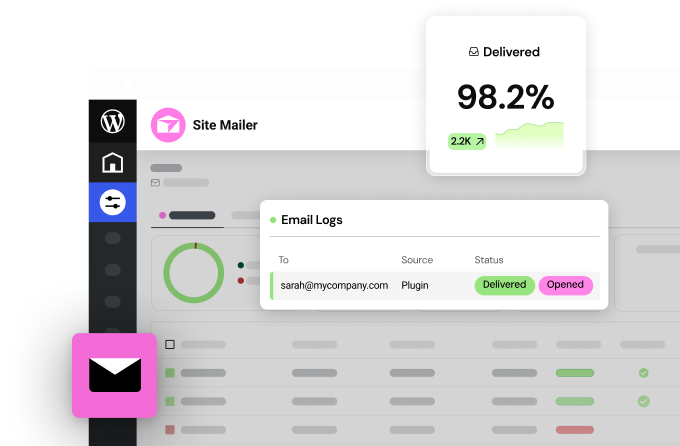
- Reliability: Sending emails from a server is notoriously unreliable (spam filters often block PHP mail()). Site Mailer solves this by providing a reliable SMTP infrastructure, ensuring transactional emails (receipts, password resets) hit the inbox.
6.3 Accessibility (A11y)
The web must be inclusive. Accessibility is often a legal requirement.
- Manual Audits: You must check color contrast, keyboard navigation, and ARIA labels.
- Automated Remediation: Tools like Ally by Elementor scan your site for WCAG compliance issues and offer AI-powered fixes. This ensures you meet standards without needing to be an accessibility certification expert.
For a visual guide on enhancing accessibility, watch this overview: https://www.youtube.com/watch?v=-2ig5D348vo
Phase 7: Decision Framework
When should you code from scratch, and when should you use a platform?
The Case for Hand-Coding
- Learning: There is no better way to learn web standards.
- Proprietary Apps: If you are building a complex SaaS dashboard or a web app with unique logic.
- Microsites: Extremely simple, single-page sites where a CMS is overkill.
The Case for the Platform (Elementor)
- Agencies & Freelancers: Time is money. The ability to reuse templates and kits via the Elementor Library increases profit margins.
- Marketing Teams: Marketers need to iterate fast. They cannot wait for a developer to deploy code changes for a simple A/B test.
- eCommerce: Building a custom WooCommerce theme from scratch takes weeks. The WooCommerce Builder allows for custom product templates and checkout flows without touching PHP templates.
- Designers: For those who want “pixel-perfect” control over layout, typography, and motion without battling CSS specificity. For Designers, the platform acts as a direct translation of their vision to the browser.
Conclusion
Building a website without a website builder is a journey of understanding. It demystifies the web. You learn that a website is simply a file on a computer (server) that sends text (HTML) to another computer (browser). Mastering this process makes you a better professional.
However, mastery also means knowing the right tool for the job. While you can build a house using only a hand saw and a hammer, modern construction uses power tools for efficiency and precision. Similarly, modern Web Creators leverage platforms like Elementor Pro not because they can’t code, but because it allows them to deploy high-performance, secure, and scalable websites faster. They combine their code-level knowledge with the efficiency of a platform to deliver superior results.
Whether you choose to write every tag by hand or leverage a visual platform, the goal remains the same: to create a powerful, accessible, and beautiful web experience.
Explore how professionals combine these methods: https://www.youtube.com/watch?v=gvuy5vSKJMg
10 Frequently Asked Questions (FAQs)
1. Is building a website from scratch cheaper than using a builder? Not necessarily. While you avoid monthly subscription fees for a builder, you must pay for domain registration, hosting, SSL certificates, and premium plugins for security, backups, and SEO. The value of your time is also a significant cost factor; hand-coding takes exponentially longer.
2. Does using a platform like Elementor produce “bloated” code? Modern platforms have optimized their output significantly. Elementor, for instance, uses modular asset loading, meaning it only loads the code for the widgets you are actually using on the page. Coupled with the Hello Theme, the output is often cleaner and faster than code written by an inexperienced developer.
3. Do I need to learn JavaScript to build a website? For a basic informational site, HTML and CSS are sufficient. However, for any interactive elements—mobile menus, sliders, form validation, or dynamic content updates—JavaScript is essential.
4. Can I use Elementor on any hosting provider? Yes, Elementor works on any host that supports WordPress. However, for optimal performance, managed hosting solutions like Elementor Hosting are recommended because the server architecture is specifically tuned for the platform’s requirements.
5. What is the difference between a static site and a dynamic site? A static site (HTML/CSS) displays the same content to every visitor and requires manual code edits to update. A dynamic site (WordPress) uses a database to generate content on the fly, allowing for user accounts, search functionality, and easy content updates via a dashboard.
6. How do I make my hand-coded site secure? Security relies on layers: securing the server (firewalls), securing the connection (SSL/HTTPS), and securing the application (sanitizing inputs to prevent SQL injection). Platforms often handle these layers for you.
7. Can I export my design from Elementor to HTML? Elementor runs on WordPress, which relies on a database (PHP/MySQL). You cannot simply export a “design file” to static HTML without third-party tools. However, you own your data and content, unlike closed SaaS builders where you are locked into their ecosystem.
8. Why is “Semantic HTML” important? Semantic HTML (using tags like <header>, <article>, <footer>) provides context to search engines about what the content is. This helps SEO rankings. It is also critical for screen readers, allowing visually impaired users to navigate your site effectively.
9. Can I build a custom eCommerce store without code? Yes. Using WordPress with WooCommerce and the WooCommerce Builder, you can visually design every part of the shopping experience—product pages, carts, and checkouts—without writing PHP templates.
10. What is the best way to back up a hand-coded website? You must manually back up both your files (via FTP) and your database (via phpMyAdmin). Professional hosting environments automate this, taking daily snapshots that you can restore with a single click.
Looking for fresh content?
By entering your email, you agree to receive Elementor emails, including marketing emails,
and agree to our Terms & Conditions and Privacy Policy.