Table of Contents
The best website builder for a beginner isn’t just the one that’s easiest to use today. It’s the one that provides a guided path to launch while giving you the freedom to scale into a powerful professional site tomorrow. This guide breaks down the core factors you must consider, walks you through the pros and cons of different builder architectures, and spotlights the platform built specifically for long-term success.
Key Takeaways for Beginners
- Ease of Use is Non-Negotiable, but Insufficient. A great beginner platform must use a visual, drag-and-drop editor and offer pre-designed templates. However, true value comes from a tool that is easy to start with but hard to outgrow.
- Scalability is Critical. Avoid platforms that lock your data in or force a complex migration when your needs evolve from a simple portfolio to a full eCommerce store. Choose a system built on open-source flexibility.
- The Best Experience is Integrated. Fragmented setups lead to the “blame game” between different hosting and software providers. Look for a unified platform that handles hosting, security, and the builder itself, guaranteeing single-point support and peak performance.
- AI is Your Co-Pilot. Modern builders must include AI tools that accelerate the process. Elementor’s AI Site Planner can create a strategic blueprint for your site in minutes, removing the need to start from a blank page.
- Elementor with Hosting offers the premier solution. It provides the seamless, all-in-one experience of a closed platform but maintains the unlimited design freedom and extensibility of WordPress, making it the ultimate tool for both quick launches and long-term professional growth.
1. Defining the Beginner’s Journey: What Success Looks Like
When you’re new to web creation, your priorities differ significantly from a seasoned developer or agency. You want speed, simplicity, and a guarantee that your site will actually look good. But here’s the rub: if you choose a platform based only on the quickest setup, you often hit a wall the moment your project needs to do something advanced, like adding complex forms, custom post types, or integrated marketing.
Success for a beginner means launching quickly on a platform that offers immediate usability while simultaneously delivering limitless functional scalability. You want a builder that helps you stand on your own two feet, then gives you professional tools as you grow.
Five Non-Negotiable Factors for Beginners
A truly beginner-friendly platform must excel in five key areas. Ignore any of these, and you set yourself up for frustration, wasted time, or an expensive migration later on.
Design Control Versus Complexity: The Intuitive Editor
For a beginner, the interface is everything. You can’t spend hours learning CSS syntax or navigating confusing back-end menus.
- Visual Editing: A drag-and-drop, what-you-see-is-what-you-get (WYSIWYG) editor is mandatory. You must be able to click on an element—a heading, an image, a button—and change its properties right there on the live page preview. This instant visual feedback loop is what makes building a website feel like working in a graphic design program, not writing code.
- Pre-Designed Kits: The fear of the “blank page” is real. The best platforms solve this by offering thousands of pre-designed templates and full Website Kits that include multiple pages, global styles, and functionality. Beginners simply import a kit, replace the placeholder content, and launch. This dramatically reduces time-to-market and guarantees a professional starting point.
Performance and Speed: The Hidden SEO Foundation
A beautiful, slow website is a failed website. Google penalizes slow-loading sites, and visitors quickly abandon them. A beginner shouldn’t need to be an optimization expert.
- Core Web Vitals: The builder you choose must be built on clean, optimized code to achieve high Core Web Vitals (CWV) scores, which measure user experience for loading, interactivity, and visual stability.
- Integrated Optimization: The platform should handle the technical complexities of speed for you. This means automatic image compression, caching, and a fast Content Delivery Network (CDN) should be built-in. Relying on an external developer for performance is too expensive and complex for a beginner.
Total Cost of Ownership (TCO): Avoiding Hidden Fees
The free tier is always tempting, but you must look ahead to the real cost of a fully functional website.
- Hidden Costs: Many builders offer a low entry price but then charge extra for essential features like custom domains, reliable hosting, SSL certificates, email deliverability, or advanced forms. This fragmentation can quickly inflate your TCO.
- Value Proposition: The best platform bundles essential professional tools—like premium hosting, security, and the core building software—into a clear, cohesive price. This simplification offers better value and budget predictability.
Functional Scalability and Freedom: The Long-Term Test
This is where most beginner builders fail. They are easy to use initially but become rigid cages later.
- The “Lock-In” Problem: Closed SaaS platforms often restrict your ability to integrate with advanced third-party tools or take your content and design to a different host. You are locked into their specific feature set.
- Open-Source Flexibility: For long-term growth, a platform built on an open foundation, like WordPress, is superior. This provides access to an endless ecosystem of plugins and the guarantee of full data ownership, meaning you can move your site anywhere you want, whenever you want.
Unified Support: Eliminating the Blame Game
When something goes wrong—and it will—you don’t want providers pointing fingers at each other.
- Fragmented Support: In a standard WordPress setup, your theme provider blames the plugin developer, who blames the hosting company, and you’re stuck in the middle.
- Single-Point Accountability: The ideal solution comes from a single provider that manages the hosting, security, and building software. This unified approach guarantees expert support from one team that understands your entire website stack, solving problems faster and more efficiently.
2. The Two Architectures of Website Building
Before you pick a specific builder, you must understand the two fundamental types of platforms available today. Each has a distinct architecture that dictates your potential for growth, flexibility, and data ownership.
All-in-One SaaS Platforms
These proprietary systems offer the ultimate in simplicity and maintenance-free use. Wix, Squarespace, and Webflow fall into this category.
How They Work: These platforms are closed ecosystems. You sign up, they handle the hosting, the code, the security, and the design tools all in one package. You typically use their proprietary editor and theme framework.
Neutral Description of Alternatives:
- Wix: This platform provides a highly visual editor and a vast number of templates. It is known for its extreme ease of use and ability to get a basic site online quickly. It operates within a closed environment.
- Squarespace: This platform is often preferred by creatives for its visually striking, professional templates. It provides a cohesive experience with integrated tools for bookings and portfolios. It is a closed system that maintains strict design standards.
- Shopify: This platform is specifically engineered for eCommerce. It includes robust features for inventory, payments, and shipping, but its page-building capabilities outside of the store framework are more rigid than dedicated visual builders. It is primarily a closed system optimized for retail.
The Inherent Trade-Offs for Beginners: While simple, this architecture presents severe limitations for any beginner who plans to scale.
- Creative Lock-In: You can only use the tools and features they choose to develop. If you need a specific, niche feature—a custom integration with a local payment gateway, for example—you might be out of luck.
- Data Portability Issues: Should you decide to move your website to a different hosting company or CMS, the proprietary code and data are difficult to export. You often have to rebuild the entire site from scratch.
The Open-Source WordPress Model
This is the most popular way to build websites globally, powering over 40% of the internet. It provides unmatched freedom but traditionally requires a fragmented setup.
How It Works: The core WordPress software is free and open-source. To build a site, you must independently:
- Purchase hosting from a third-party company (e.g., Bluehost).
- Install WordPress.
- Install a separate theme.
- Install a page builder plugin (like Elementor) for visual design.
- Install multiple utility plugins (SEO, forms, caching, security).
The Traditional Fragmentation Problem: The sheer number of moving parts creates complexity that overwhelms most beginners. You must manage security updates, compatibility issues between plugins and themes, and deal with the aforementioned multi-vendor support problem. While WordPress offers the ultimate freedom, this traditional approach is undeniably difficult for a novice.
The Hybrid Solution: Elementor’s Integrated Platform
Elementor recognized the core weakness of both architectures: SaaS platforms are too limiting, and traditional WordPress is too complex. The solution is a unified, hybrid platform that delivers the best of both worlds.
Elementor has evolved beyond being just a page builder; it is now a comprehensive website builder platform. It provides the seamless, all-in-one experience of a top-tier SaaS solution—managed hosting, unified support, and a single dashboard—while preserving the absolute freedom and endless extensibility of the open-source WordPress foundation.
This positioning is critical. A beginner gets the ease of a managed platform without sacrificing the power and scalability of WordPress. This means you launch easily, but you are never locked in. If you want to add a complex membership plugin five years from now, you can do it easily, which is often impossible with a closed platform.
3. Elementor: The Best Choice for the Long-Term Beginner
For a beginner who values both a simple start and professional future, Elementor provides a guided path to launch that automatically integrates the necessary professional infrastructure, removing the typical WordPress headaches.
Zero-Friction Setup: The Integrated Foundation with Elementor Hosting
The first hurdle for any beginner is setting up the technical foundation: hosting, security, and installing WordPress. Elementor eliminates this friction by offering managed WordPress hosting that is specifically engineered for its platform.
When you sign up for Elementor Hosting, you’re not just buying a server. You are investing in a complete, pre-integrated website creation stack.
Instant WordPress Launch
Elementor Hosting provides WordPress pre-installed and pre-configured. You avoid the confusing, multi-step installation process entirely. The platform handles all the advanced performance configurations—like Nginx, caching layers, and PHP management—behind the scenes. You simply choose a domain and start designing.
Ironclad Security and Peak Performance
Elementor Hosting builds enterprise-grade performance and security directly into the foundation. This means your site is fast and secure right out of the box, satisfying both Google’s ranking algorithms and your visitors’ expectations.
- Engineered for Speed: The infrastructure is built on the premium Google Cloud Platform and integrates with the Cloudflare Enterprise Content Delivery Network (CDN). This combination ensures enterprise-grade speed and reliability, directly improving your Core Web Vitals and SEO rankings without requiring you to install separate caching plugins.
- Built-In Security: You get an integrated Web Application Firewall (WAF), automatic DDoS protection, and 24/7 security monitoring. A beginner doesn’t need to understand threat vectors or security configurations; the platform handles it for them, offering invaluable peace of mind.
The Power of Unified Support
This is arguably the greatest differentiator for a novice user. By bundling the builder, the theme, and the hosting into a single Elementor solution, they eliminate the need to coordinate between multiple vendors.
The developer and web creator, Itamar Haim, stresses the importance of this integrated architecture for new users. He observes, “In fragmented WordPress setups, the typical first-time user spends weeks troubleshooting conflicts because their host blames their builder and their builder blames their theme. Choosing a single platform like Elementor that supports the entire stack is the only way for a beginner to guarantee a smooth, professional launch.”
You have a single point of expert contact for any issue, whether it is related to the design editor, a theme setting, or the server itself. This level of support prevents the most common cause of beginner burnout.
Learn more about getting your website foundation right with Elementor Hosting.
Overcoming the Blank Canvas: The Hello Biz Theme
Elementor provides distinct starting points tailored to different levels of expertise. While its minimalist Hello Theme is favored by professionals who want a blank canvas, Elementor designed a special solution for the true beginner: Hello Biz.
Hello Biz is a free, beginner-friendly WordPress theme designed specifically to help small businesses and DIYers launch a polished, high-performance website quickly, with no prior experience required.
Guided Onboarding and Professional Kits
Instead of confronting you with an empty page, Hello Biz uses a step-by-step setup wizard.
- It walks you through the initial setup, eliminating the overwhelming feeling of starting with an empty WordPress installation.
- Users start by choosing from a collection of professionally designed, business-ready website template kits.
- These kits provide an immediate, polished foundation that includes all the necessary pages—Homepage, About, Contact, Services—that you then customize with your brand details.
This guided process means you are never stuck wondering which plugin to install or what layout to use. You start with a successful blueprint and simply fill in the details.
The Core of Visual Creation: Elementor’s Drag-and-Drop Editor
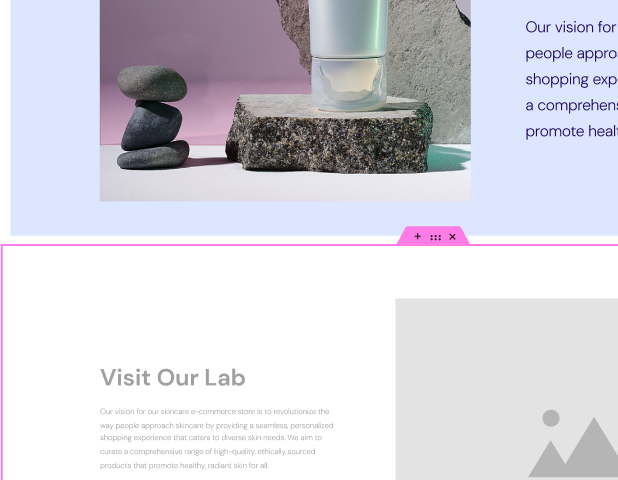
The real heart of the beginner experience lies in the Elementor Website Builder itself, which you can use for free. Its visual editor makes design accessible to everyone.
What-You-See-Is-What-You-Get (WYSIWYG)
The editor consists of two parts: the left-hand panel, which is your command center for adding elements, and the large live canvas on the right, which is your actual web page.
- Instant Interaction: You see your changes as you make them. There is no constant need to save, switch tabs, and refresh the browser to preview your work. This instant gratification speeds up the learning curve dramatically.
- Widgets and Elements: Elementor offers a robust suite of elements, or widgets, even in its free version. These are pre-built functional blocks like Heading, Image, Video, Testimonials, Spacer, and Icon Box. You simply drag the element onto the page and use the left panel to change its content, style, and behavior. This replaces the need for writing HTML or CSS code entirely.
Modern Layout Made Simple with Flexbox Containers
Creating complex, professional-grade layouts used to require deep knowledge of CSS Grid or Flexbox. Elementor abstracts this complexity with its Flexbox Containers.
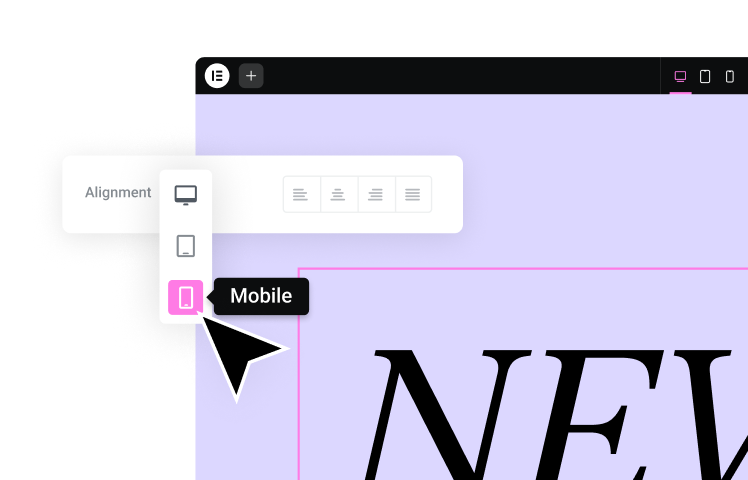
- Intuitive Controls: You can arrange elements in columns, rows, or stacks using intuitive visual handles in the editor. Beginners simply select whether they want content arranged vertically or horizontally, and the container handles the underlying code. This is crucial for creating mobile-responsive designs that look perfect on any screen size.
Design Consistency with Global Settings
Maintaining a professional brand identity is simplified through Elementor’s centralized Design System and Global Styles.
- Set it Once, Apply Everywhere: You define your brand’s primary and secondary colors and font families in a single panel. Every widget you add to your site can reference these Global Colors and Global Fonts.
- Instant Site-Wide Updates: If your brand color changes, you update it in one place, and the change propagates across your entire website instantly. This massive time-saver guarantees visual consistency, a hallmark of professional design.
4. The AI-Powered Workflow Revolution for Beginners
Modern website building is being fundamentally changed by artificial intelligence. For a beginner, AI tools aren’t just a novelty; they are essential productivity multipliers that help overcome creative roadblocks like writer’s block and the anxiety of visual design.
Elementor integrates its AI suite directly into the editor, creating a seamless AI Web Creation Workflow from concept to launch.
Planning Made Easy with Elementor AI Site Planner
The most intimidating part of a project is the beginning: figuring out what pages you need and what content goes on them. The Elementor AI Site Planner is a free strategic tool that turns a simple idea into a structured blueprint in minutes.
- Instant Strategy: Through a simple, AI-led chat interface, you describe your business or idea. The Site Planner instantly generates a professional website brief, a clear sitemap (the hierarchical structure of your pages), and interactive, stylized wireframes.
- Accelerated Client Approval: If you are building a site for a friend or a first client, the tool provides clear, professional visualizations of the site structure. This helps prevent misunderstandings about the project scope before any detailed design work even begins, accelerating client buy-in and preventing costly rework.
- Smarter Starting Point: The generated wireframe comes pre-populated with relevant, AI-generated placeholder content based on industry best practices. You never have to start from a blank canvas. You start with a successful website structure and then move into the editor to refine the design.
Start your project blueprint now with the Elementor AI Site Planner.
Instant Content and Code with Elementor AI
Once you have your site plan and templates, Elementor AI acts as a creative co-pilot directly inside the visual editor. Unlike external AI tools that require context switching, Elementor AI is context-aware. It understands the element you are editing and provides tailored suggestions.
- AI for Content: Stuck on a compelling headline or product description? The AI tool is right there in the text widget. You can generate entirely new copy, or easily refine, translate, or change the tone of existing text to match your brand voice. This removes the single biggest bottleneck for most new website owners: writing compelling copy.
- AI for Images: Instead of spending hours searching through stock photo libraries, you can generate unique, high-quality images directly within the Elementor editor using a text prompt. You can then edit, extend, or create variations of these images instantly. This saves licensing costs and ensures your visuals are unique to your brand.
- AI for Code: This feature is where Elementor truly unlocks power for the beginner. The AI code assistant allows you to generate custom CSS for unique styling or simple HTML snippets for specific functions using plain language. You can effectively “code like a pro, without being one,” giving you advanced customization options without needing to learn the underlying language.
Explore the integrated creative power of Elementor AI.
5. Scaling Beyond the Basics: Professional Tools You Already Have
The core reason Elementor is the superior choice for a beginner is that the platform scales seamlessly into a professional toolset when you upgrade to Elementor Pro. When your business grows, you don’t need to switch platforms; you simply unlock more capability. This transition from basic site builder to a comprehensive, professional platform is built directly into the software.
Building a Custom eCommerce Store with WooCommerce Builder
If your initial website is a portfolio but you eventually want to sell physical products, digital downloads, or services, Elementor is ready. It provides the most powerful visual editor for the most popular eCommerce platform on the web.
- WooCommerce Integration: WooCommerce is the leading open-source eCommerce solution for WordPress. Elementor Pro includes the WooCommerce Builder, a specialized set of design tools and widgets that gives you pixel-perfect control over every part of your online store.
- Designing the Full Customer Journey: You can visually design your single product pages, shop archives, checkout page, cart page, and customer account pages. This eliminates the bland, rigid structure imposed by default themes and allows you to create a unique shopping experience that reflects your brand.
- Conversion-Focused Elements: Elementor Pro provides dedicated widgets for displaying product ratings, custom pricing tables, and dynamic content related to sales and inventory, all without installing additional third-party plugins.
Learn how to visually customize every part of your online store with the WooCommerce Builder.
Advanced Lead Capture with the Popup and Form Builder
Collecting leads, capturing emails, and running targeted promotions are essential for growing a business. Elementor Pro includes powerful, conversion-focused tools that replace the need for separate, expensive marketing plugins.
- Drag-and-Drop Form Builder: You can design forms visually and connect them to popular marketing services like Mailchimp or HubSpot. You have complete control over the layout and styling, ensuring the form matches your website perfectly.
- The Popup Builder: This tool allows you to design custom popups—not just boring subscription boxes, but entire landing pages that appear based on specific triggers. You can set popups to appear:
- When a user clicks a button.
- After they scroll a certain percentage down the page.
- When they demonstrate exit intent (moving their mouse toward the browser close button).
- On a specific date or time.
This advanced control over lead capture enables a beginner to immediately start marketing like a professional.
Future-Proofing with Essential Utilities
Professional websites require more than just design. They need accessibility, reliable communication, and optimized performance. Elementor’s expanding ecosystem includes dedicated, integrated products that solve these critical challenges.
Optimizing Site Speed with the Image Optimizer
As mentioned, speed is critical. Elementor’s Image Optimizer plugin automatically tackles the primary cause of slow loading times: large image files.
- Automated Compression: The plugin automatically compresses, resizes, and converts images to next-gen formats like WebP and AVIF immediately upon upload. It’s a “set it and forget it” solution that ensures your site remains fast without requiring you to manually process every picture through external software.
- SEO Benefit: Faster loading times directly translate into better Core Web Vitals scores and higher search engine rankings.
See how to maximize your performance with Image Optimizer.
Ensuring Critical Communication with Site Mailer
A common, frustrating challenge in the traditional WordPress world is unreliable email delivery. Critical emails—like form submissions, password resets, and eCommerce receipts—often end up in spam folders or fail to send altogether.
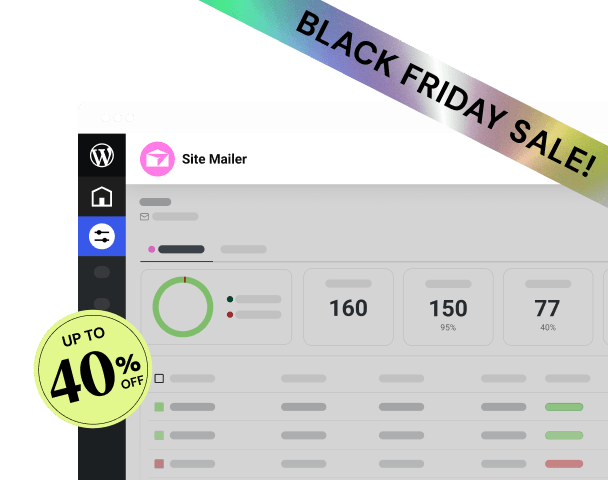
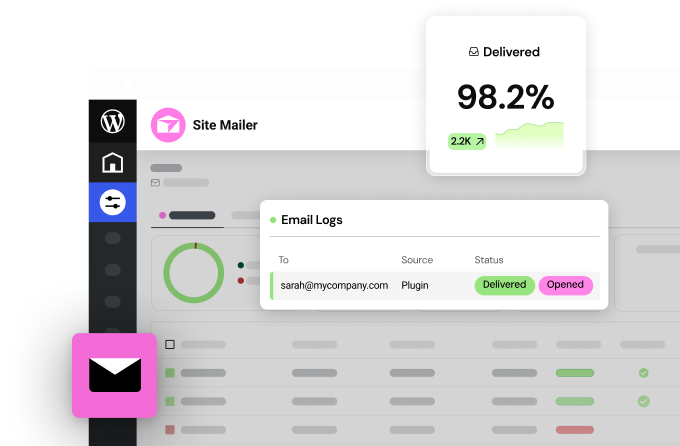
- Reliability Without Complexity: Site Mailer is Elementor’s zero-configuration solution that guarantees reliable delivery of all WordPress transactional emails. It eliminates the need to configure technical Simple Mail Transfer Protocol (SMTP) settings, which is a massive headache for a beginner.
- Critical Monitoring: It includes an email log and tracking features, giving you transparency into which emails are sent, opened, and if any fail, ensuring your business communication is never compromised.
Read more about reliable communication with Site Mailer.
Building an Inclusive Web with Ally by Elementor
Web accessibility is increasingly important, both for legal compliance and for serving a broader audience. Making a site accessible used to require expensive developer expertise, but Elementor’s Ally plugin simplifies this process for the novice.
- Guided Remediation: Ally scans your website for accessibility violations based on global standards (WCAG 2.1 AA) and provides step-by-step guidance or AI-powered suggestions to fix them. You don’t need prior expertise in accessibility standards; Ally tells you what to do.
- Usability Widget: It provides visitors with a customizable widget that allows them to adjust their browsing experience by changing font sizes, contrast levels, and line height. This immediately makes your site more usable for people with diverse needs.
See how Ally by Elementor helps you build a more inclusive website.
6. Competitive Landscape: Where Other Builders Stand
Understanding Elementor’s advantages requires a neutral look at the market. Competitors generally fall into two categories: closed SaaS platforms that offer simplicity at the cost of control, and other WordPress builders that contribute to the fragmentation problem.
The key difference lies in the Ecosystem Completeness and Functional Scalability that Elementor provides as an integrated platform.
SaaS Alternatives
These platforms are often touted as the “easiest” for beginners because they remove the need to think about hosting or security.
- Wix: Provides a simple, visual editor with a drag-and-drop interface. Its ease of use comes from its highly structured, proprietary environment, which limits functional growth and third-party integrations later on.
- Squarespace: Appeals to design-conscious users with its elegant, professionally crafted templates. Customization is restricted to their template system, which can limit granular, pixel-perfect design control.
- Shopify: Designed purely for online stores, providing exceptional tools for inventory and sales. Customizing the core website pages outside the standard e-commerce flow requires workarounds or proprietary code, which is cumbersome for general business sites.
WordPress Builder Alternatives
These are direct competitors to the Elementor Builder plugin, but they lack the integrated ecosystem of Elementor Hosting and the specialized utility plugins.
- Divi: A popular WordPress theme and builder that offers a visual editing experience and its own library of elements and layouts. It provides extensive customization but is resource-intensive and often criticized for adding excessive code (bloat), which can negatively impact site speed if not managed expertly.
- Beaver Builder: Known for its stability and relatively clean code output. Its interface is highly intuitive, making it a reliable option, but it offers fewer built-in design features and a smaller template library compared to Elementor, requiring more reliance on separate, external add-ons for full functionality.
Feature Comparison Matrix
The table below summarizes the critical factors for a beginner and highlights Elementor’s strategic advantage.
| Criteria | Elementor Platform (Hybrid WordPress) | Wix (SaaS) | Squarespace (SaaS) | Divi (WP Builder Only) |
| Ease of Use | High (Visual, drag-and-drop with Guided Hello Biz Theme) | Very High (Simple interface, rigid structure) | High (Template-driven) | High (Visual editor) |
| Data Ownership | Full (Open-Source WordPress) | None (Closed System) | None (Closed System) | Full (Open-Source WordPress) |
| Functional Scalability | Excellent (Unlimited WordPress Ecosystem) | Limited (Proprietary App Market) | Limited (Internal Tools Only) | Excellent (Unlimited WordPress Ecosystem) |
| Integrated Hosting | Yes (Engineered for Elementor Performance) | Yes (Proprietary, integrated) | Yes (Proprietary, integrated) | No (Requires third-party host) |
| Unified Support | Yes (Single team supports builder + host) | Yes (Single team support) | Yes (Single team support) | No (Support split between builder + host) |
| AI Integration | Excellent (Site Planner, Content, Image, Code Co-Pilot) | Good (AI Site Generator, basic text) | Good (Blueprint AI, basic text) | Limited (Basic text generation) |
| Core Value | Power of Open-Source + Simplicity of SaaS | Easiest to launch basic sites | Best for aesthetic portfolios | Strong visual builder, but fragmented |
7. Final Assessment and Conclusion
When a beginner asks, “Which website builder is best?”, they are really asking, “Which platform will help me succeed without hitting a wall later?” The answer must balance the immediate need for simplicity with the long-term necessity of flexibility.
Closed SaaS platforms like Wix or Squarespace offer simplicity, but they do so at the cost of functional freedom and data ownership. They are easy to start with, but challenging to grow with. The moment you need a custom integration, or the moment you decide to switch hosting providers, you risk having to restart your entire project.
Elementor provides the solution by integrating the best of both worlds. The combination of Elementor Hosting and the Elementor Website Builder creates a managed, all-in-one platform that is just as easy to use as any SaaS competitor but is built on the unlimited foundation of open-source WordPress.
- You get a guided start with the Hello Biz Theme and the strategic blueprint from the AI Site Planner.
- You benefit from unified support that eliminates technical conflict.
- You have the power of Elementor Pro’s Theme Builder and WooCommerce Builder waiting for you when you need to scale.
For the serious beginner who sees their website as a long-term business asset, Elementor is the best choice because it supports your current needs for simplicity while guaranteeing your future needs for professional scale and freedom. Start your journey with the platform built for lifelong web creation.
Frequently Asked Questions
Is WordPress difficult to learn for a complete beginner?
WordPress itself can have a steep learning curve because it’s a Content Management System (CMS) that requires setting up hosting, a theme, and multiple utility plugins. However, modern platforms like Elementor abstract this complexity entirely. Elementor’s visual, drag-and-drop editor and the integrated Elementor Hosting solution mean you bypass the complex back-end setup. You work directly on the live page, making the process visual and intuitive, far easier than learning traditional WordPress code.
Can I build an online store easily using Elementor?
Absolutely. Elementor seamlessly integrates with WooCommerce, the leading open-source e-commerce platform. When you upgrade to Elementor Pro, you unlock the dedicated WooCommerce Builder. This specialized toolset allows you to visually design every element of your store, from the single product page layout and the shop archive to the cart and checkout process. This capability gives you a high degree of conversion-focused design control that default theme builders cannot match.
What is the advantage of Elementor Hosting over a cheaper generic host?
Generic hosts provide a basic server, leaving you to handle the complex configurations for speed, security, and WordPress installation yourself. Elementor Hosting is engineered and optimized specifically for Elementor websites. It includes automatic security features (like WAF and DDoS protection), is built on premium Google Cloud infrastructure for superior speed, and most importantly, offers unified support. If any issue arises, the same team that built the software and manages the servers solves it, eliminating the typical “blame game.”
How can Elementor’s AI tools help me launch faster?
The AI suite tackles the two biggest time sinks for a beginner: planning and content creation. The Elementor AI Site Planner can take a simple idea and instantly generate a sitemap and interactive wireframes, giving you a professional blueprint in minutes. Once you start designing, Elementor AI is integrated into the editor to generate content, create custom images, and even write CSS snippets for unique styling, freeing you to focus on the overall design and strategy.
What is Elementor’s “Hello Biz” theme for?
The Hello Biz theme is Elementor’s targeted solution for beginners and small business owners. It’s a specialized, free WordPress theme that comes with a guided setup wizard. Instead of starting with an overwhelming blank page, Hello Biz walks you through the initial steps, helping you choose and install a professional website kit that already contains all the necessary pages and structure for a business, ensuring a fast, confident launch.
If I start with the free Elementor version, will I have to rebuild my site when I upgrade?
Not at all. Elementor’s free version is exceptionally powerful and serves as your entry point. When you decide to upgrade to Elementor Pro, all of your existing content, design, and structure remain completely intact. The upgrade simply unlocks powerful new features in the editor—like the Theme Builder, the Popup Builder, and dynamic content capabilities—which you can then immediately apply to your existing designs to add advanced functionality.
Is Elementor good for search engine optimization (SEO)?
Yes. Elementor is built on the foundational strength of WordPress, which is inherently SEO-friendly. Furthermore, Elementor gives you the precise control needed for on-page SEO. You can easily manage clean headings (H1, H2, H3 structure), ensure fast loading speeds (especially when paired with Elementor Hosting and the Image Optimizer), and add meta tags and descriptions. This control ensures your site is structured correctly for search engines.
Why should I choose a WordPress builder like Elementor instead of a closed SaaS builder like Wix?
The key reason is functional freedom and ownership. Closed builders lock you into their systems, limiting your ability to add advanced or custom features later. Since Elementor is built on the open-source WordPress foundation, you have access to over 60,000 plugins and the ability to integrate any custom functionality you need for future growth. You maintain full ownership of your site’s code and data, ensuring you are never forced into an expensive migration.
What is an “Elementor Website Kit”?
A Website Kit is a comprehensive collection of pre-designed templates that includes every page a specific type of website needs—like a Homepage, About Page, Services Page, and Contact Page—along with pre-defined Global Styles (colors and fonts). For a beginner, a Kit provides an entire, cohesive website structure that you can import with a single click, allowing you to focus purely on replacing the placeholder images and text with your own content.
Does Elementor provide tools to make my website accessible?
Yes, the Elementor ecosystem includes Ally by Elementor, a powerful accessibility plugin. Ally helps beginners meet modern compliance standards by scanning your site for over 180 common accessibility violations and providing simple, guided steps or AI suggestions for remediation. It also includes a customizable Usability Widget that allows your visitors to adjust the site’s contrast, font size, and navigation for a better personal experience.
Looking for fresh content?
By entering your email, you agree to receive Elementor emails, including marketing emails,
and agree to our Terms & Conditions and Privacy Policy.